



MThA Society Discusses Bart Ehrman’s Jesus Before the Gospels
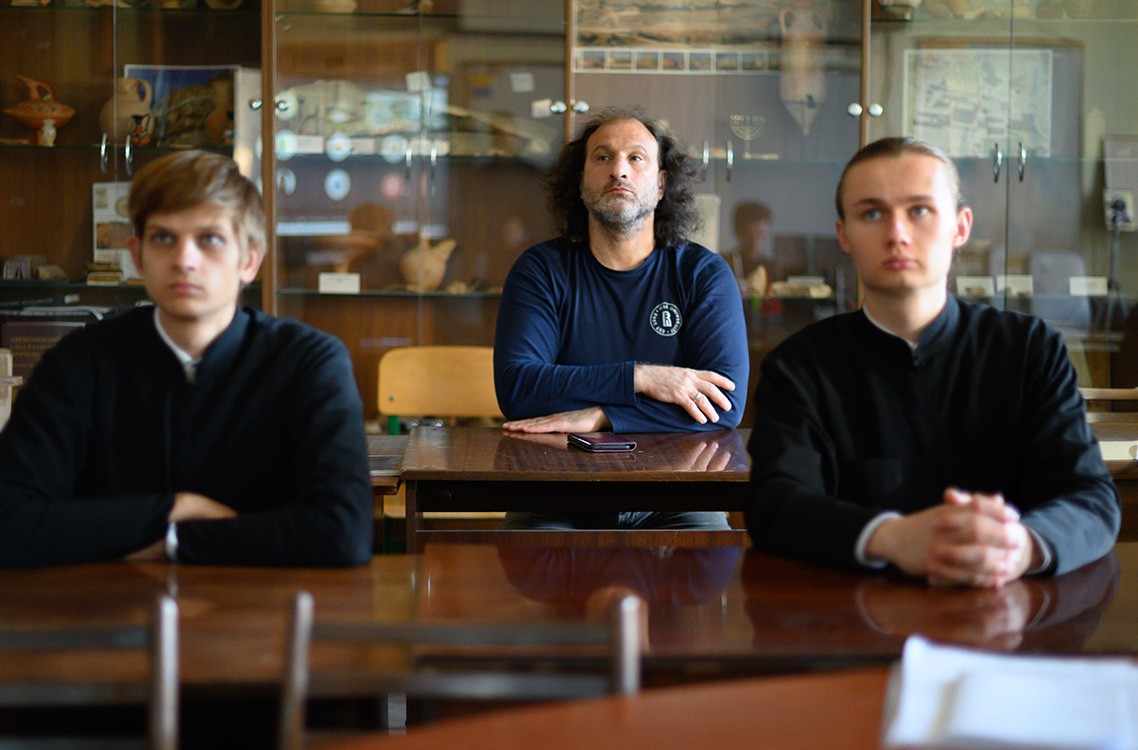
On September 9, 2026, the Orthodox Pauline Studies student theological society held another meeting in the Biblical Studies Room at the Moscow Theological Academy. Its work is supervised by Associate Professor M. V. Kovshov.
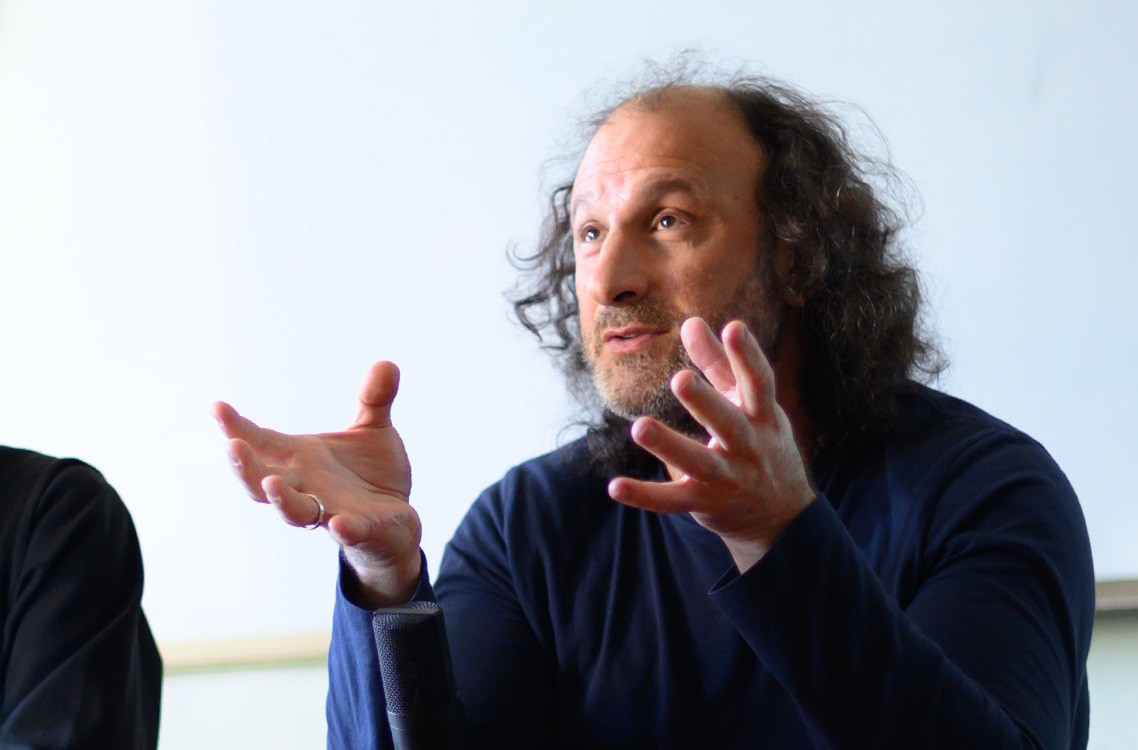
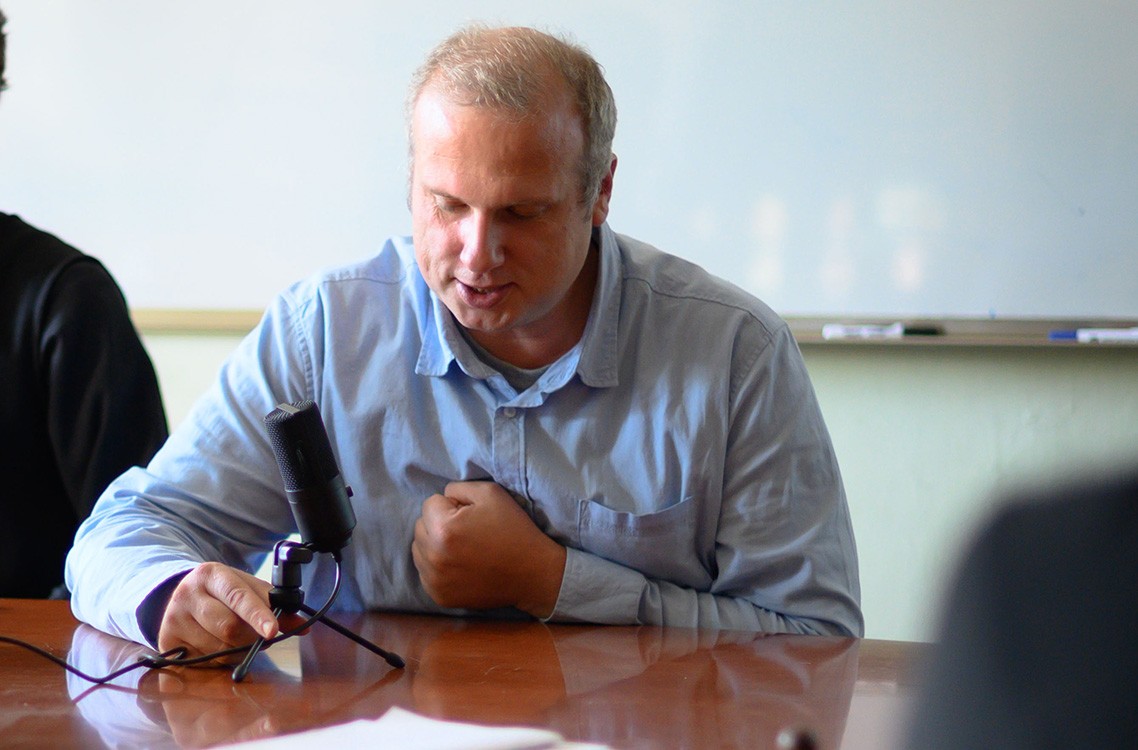
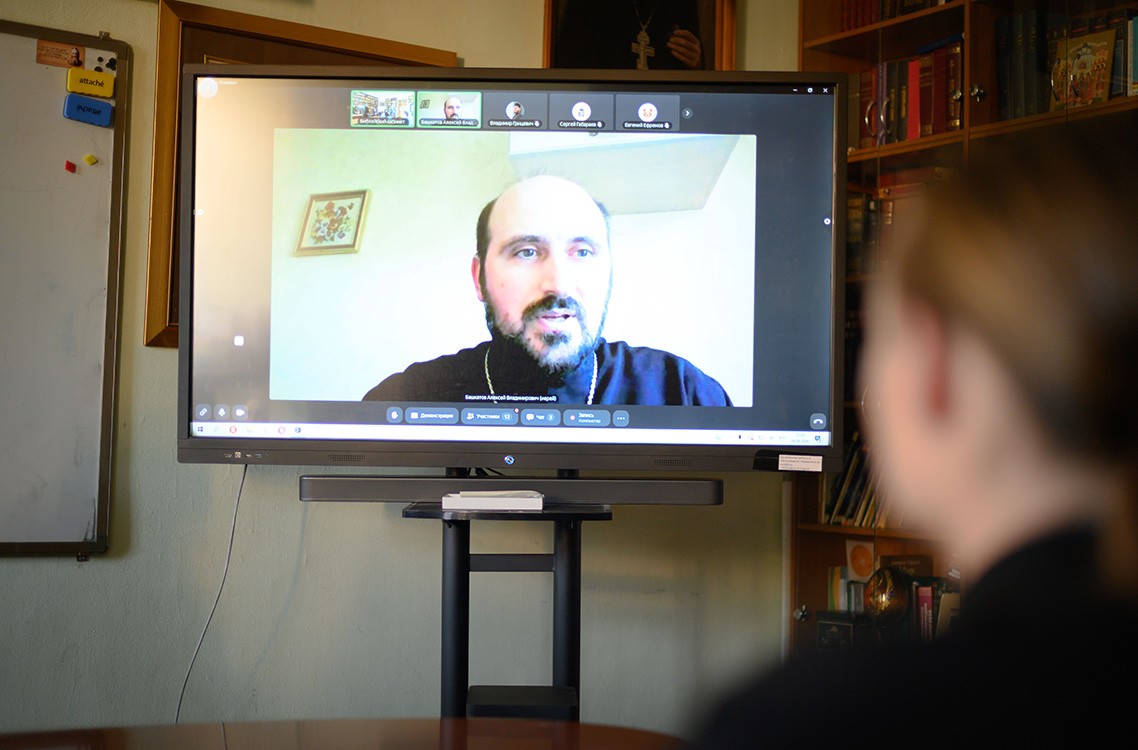
The meeting combined in-person and online participation by MThA students and postgraduate students, as well as representatives of other educational institutions belonging to the society. F. P. Kizyun, a specialist in the Academy’s Department of Biblical Studies, organised the event.
Priest Alexei Bashkatov delivered the main paper, “A Theological and Exegetical Assessment of Bart Ehrman’s Jesus Before the Gospels.”

He began with a brief portrait of Ehrman, an American New Testament scholar, professor of religious studies at the University of North Carolina, and student of the renowned textual critic Bruce Metzger. Father Alexei noted that Ehrman began as an Anglican Christian but revised his views while pursuing textual criticism and eventually became an agnostic. His popular books, translated into Russian, reach a broad readership and exert considerable influence on public perceptions of biblical texts.
Jesus Before the Gospels asks how accounts of Jesus of Nazareth’s life were passed down before they were recorded in the canonical Gospels. Ehrman argues that a long interval of oral transmission, lasting 30 to 60 years, separated Christ’s earthly life from the writing of the Gospels, and that the traditions could have changed substantially during that time. In his view, the evangelists were not eyewitnesses but people acquainted with the eyewitnesses’ followers; the workings of human memory and oral transmission inevitably altered the original content.
The speaker examined the book’s main claims in turn. The first part of his paper surveyed scholars who posited a lengthy period of oral transmission of Gospel teaching. He traced the hypothesis from biblical scholars of the seventeenth and eighteenth centuries, including G. E. Lessing and G. L. Bauer, to nineteenth- and twentieth-century researchers such as H. J. Holtzmann, J. Wellhausen, and M. Dibelius. He showed how the idea of a “tunnel period” between the events and their written record became commonplace in academic biblical studies. He then presented scholars who dispute the existence of an oral period before the Gospels were written. In particular, Father Alexei cited Eta Linnemann, who maintained that the canonical Gospels rest on eyewitness memories and criticised the very premise of literary dependence among the Synoptic Gospels.

The central part of the paper assessed arguments drawn from the Greco-Roman cultural setting. Ehrman cites low literacy in antiquity, the prevalence of oral communication in Greco-Roman culture, and the characteristics of collective memory as evidence for a lengthy oral period. Father Alexei examined six arguments based on that cultural setting and maintained that none reliably demonstrates a long interval of oral transmission between Jesus Christ’s earthly life and the writing of the canonical Gospels. The oral transmission of information in first-century Judaism, including the “tradition of the elders” mentioned in the Gospels, did not exclude simultaneous written recording; rather, it complemented the written law.
The speaker then considered the question of deliberate alterations to Scripture. Father Alexei noted that Ehrman relies on the theory of the German scholar Walter Bauer: orthodoxy was supposedly neither the earliest nor the universally dominant form of Christianity, competing forms of belief were suppressed, and scriptural texts were rewritten to reflect the victorious faction. The speaker pointed to weaknesses in this theory. Bauer did not establish that heresies were widespread, omitted major centres of the early Church such as Jerusalem, Lyon, Carthage, and Rome, and treated many assertions as established without factual support.
Using specific examples, Father Alexei challenged Ehrman’s claims about anti-adoptionist and anti-separationist changes to the New Testament text. The variant readings γένεσις and γέννησις in Matthew 1:18, for example, cannot be regarded as a deliberate distortion because the words are used synonymously; compare Luke 1:14. The expression “the only-begotten God” (μονογενὴς θεὸς) in John 1:18, which Ehrman treats as a later anti-heretical alteration, is accepted as original in the modern critical edition of the New Testament and is attested in the writings of Saints Basil the Great, Amphilochius of Iconium, and Gregory of Nyssa. As for adding the title “Lord” to the name “Jesus,” the speaker argued that the identification of Jesus as Lord runs throughout the New Testament and need not be attributed to second-century anti-Gnostic polemics. These variants can be explained by harmonisation with parallel passages and adaptation to context, rather than deliberate editing.
In conclusion, Father Alexei stressed that an examination of Greco-Roman culture in relation to the origins of the canonical Gospels showed Ehrman’s position to be unfounded, both as to the duration of oral transmission of the Gospel tradition and as to alleged deliberate changes to Scripture. Despite their popularity, Ehrman’s books require a balanced theological and exegetical assessment, which this paper sought to provide.
A discussion followed the substantial paper. Participants asked Father Alexei about particular arguments made by Ehrman and broader questions of biblical introduction, New Testament textual criticism, and responses to contemporary Western biblical criticism.
MThA Press Office