


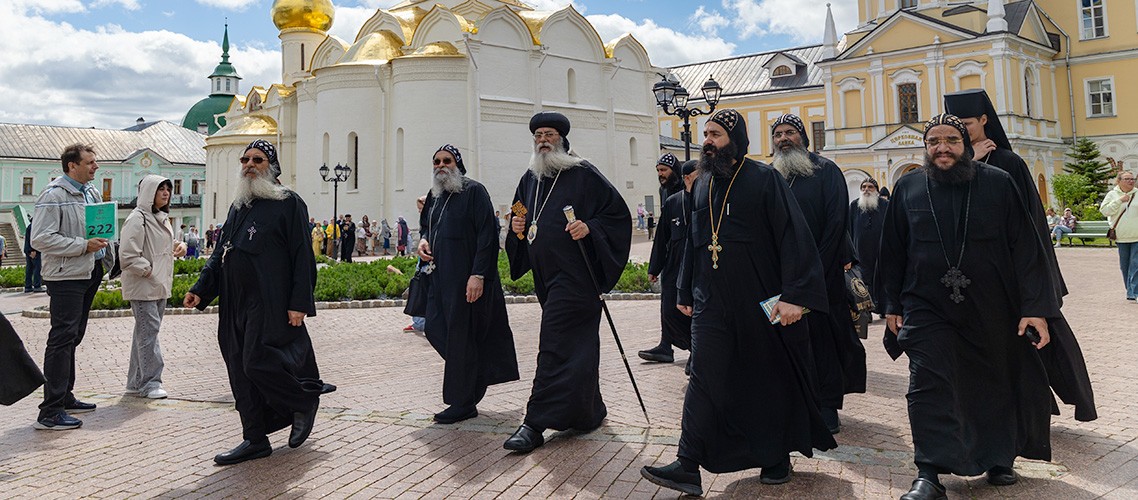
Bishop Kirill Meets Coptic Church Delegation
On July 16, 2026, a delegation of the Coptic Church visited the Holy Trinity–St. Sergius Lavra and the Moscow Theological Academy. It had come to Russia at the invitation of His Holiness Patriarch Kirill of Moscow and All Rus’ and with the blessing of His Holiness Coptic Patriarch Tawadros II.
The trip forms part of the developing dialogue between the Moscow Patriarchate and the Coptic Church and of a program of regular reciprocal visits by monastics.
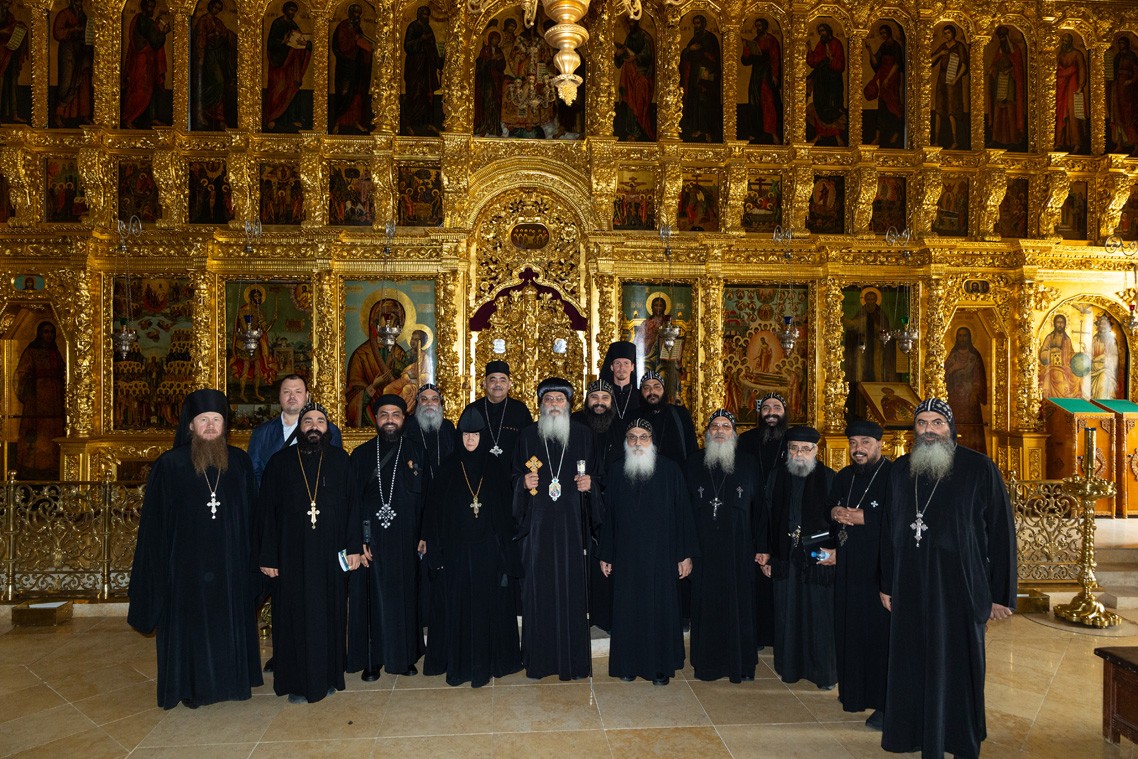
The delegation was led by Metropolitan Antonios of Jerusalem and the Middle East, a permanent member of the Coptic Church’s Holy Synod and the Coptic Patriarch’s representative in the Holy Land. The delegation included Hieromonk Arsenius Anba-Paula of the Monastery of St. Paul of Thebes in the Eastern Desert near the Red Sea; Coptic Patriarchate staff members Priest Bishoy Zaki Sidrak, Priest Alkomos Boles, Priest Seraphim Abdalla, and Deacon William Fouad; clerics of the Coptic Archdiocese of Jerusalem Hieromonk Bishoy el-Antony, Hieromonk Arsenius al-Orshalemi, Hieromonk Gabriel al-Orshalemi, Hieromonk Antonios al-Orshalemi, and Hieromonk Pachomius al-Orshalemi; and archdiocesan staff members Monk Abanoub al-Orshalemi, Monk Theophil al-Orshalemi, and Monk Samuel al-Orshalemi.
The purpose of the visit was a pilgrimage to Orthodox monasteries in Russia.
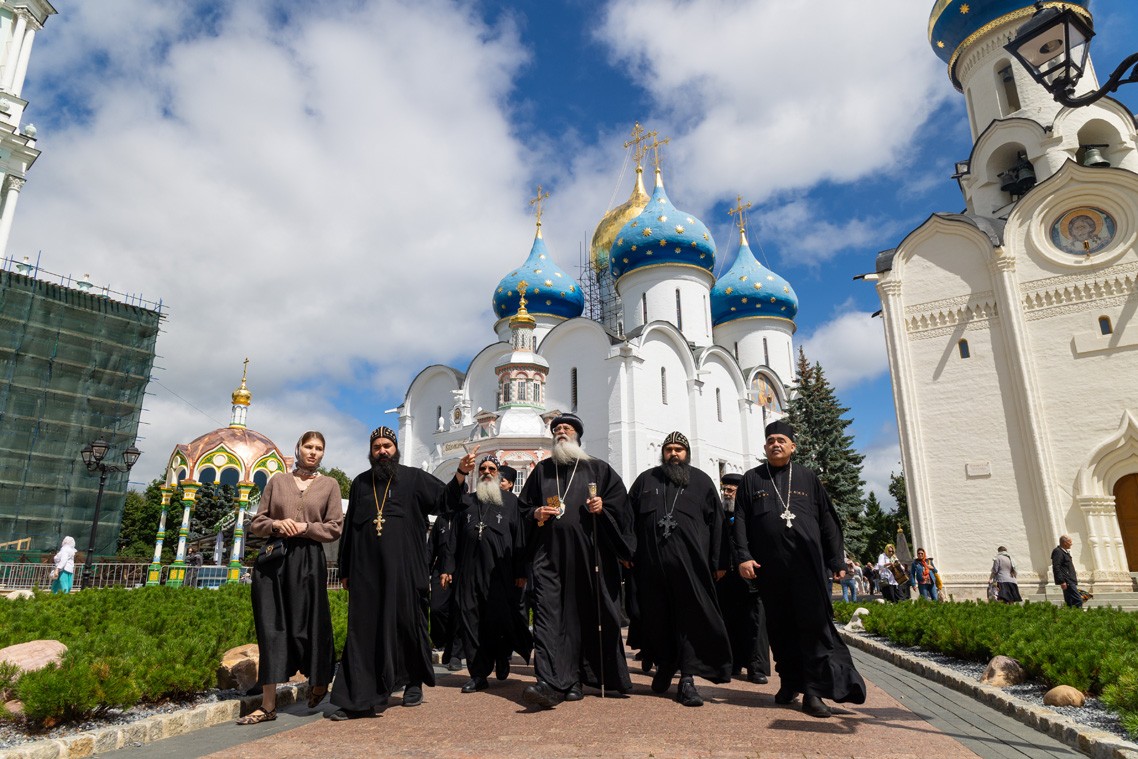
On arriving at the Lavra, members of the Coptic Church delegation visited the Trinity Cathedral, where they venerated the relics of St. Sergius and the Holy Trinity icon painted by St. Andrei Rublev.
They were then given a tour of the monastery, learning about its place in Russian history, its spiritual and cultural importance to the Russian people, and the Russian monastic tradition.
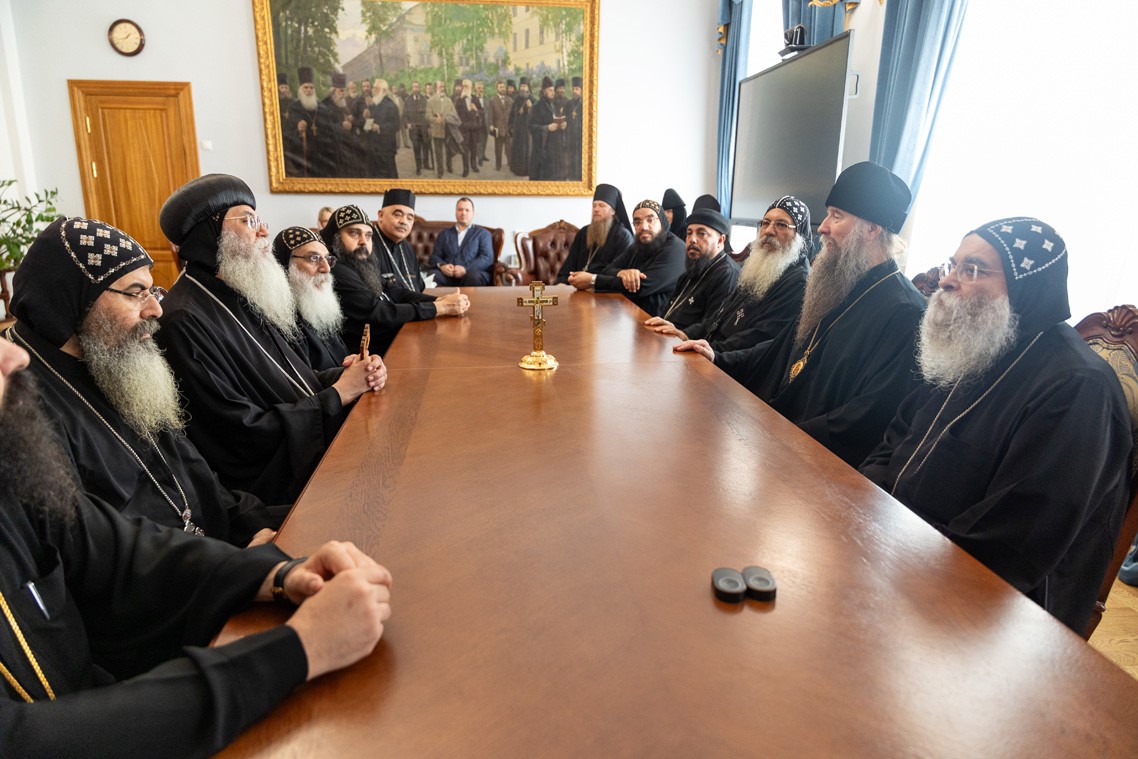
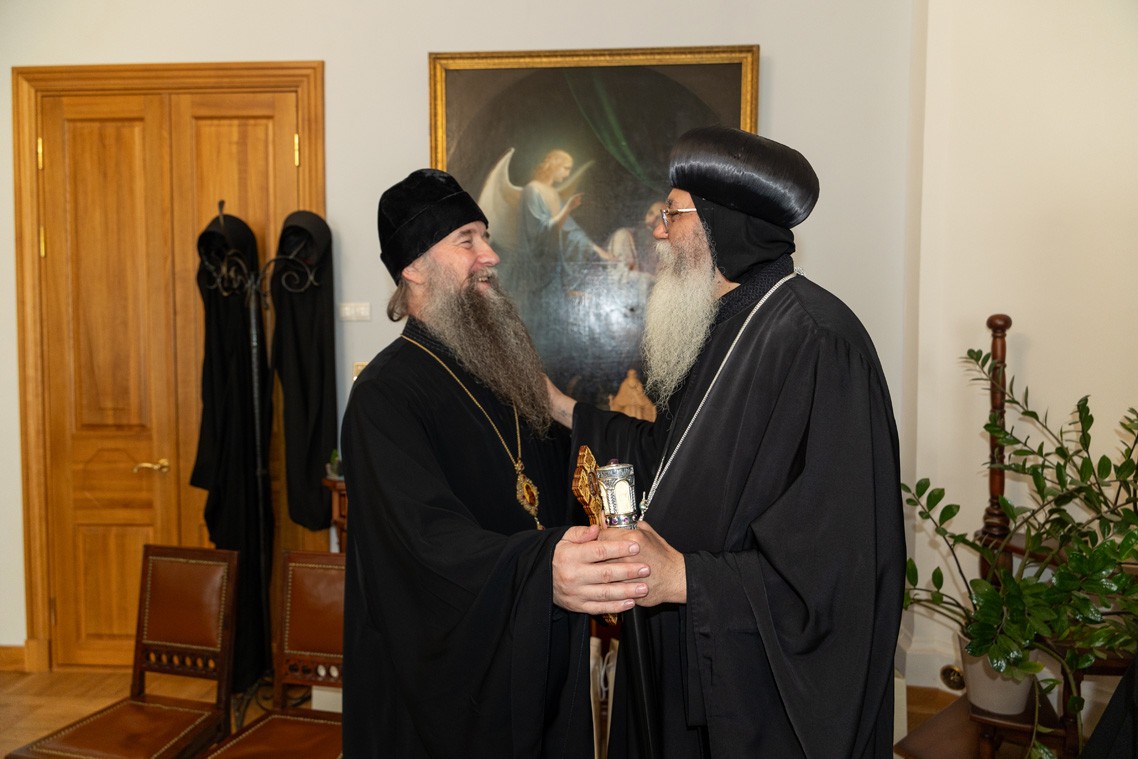
After the tour, the guests met Bishop Kirill of Sergiev Posad and Dmitrov, abbot of the monastery and rector of the Academy, at the Moscow Theological Academy.
The bishop welcomed them and expressed appreciation for their visit to St. Sergius’s monastery on the eve of his feast day. He spoke about the life of the saint of Radonezh and drew attention to unusual events in his monastic journey:
“Abba Sergius, seeking a hermit’s life, went to a remote, uninhabited place and settled here when nobody lived in this northern part of the Moscow principality. Soon other monks seeking solitude and ascetic struggle began to settle around St. Sergius. Thus the monastery arose. At first the monks lived separately, but later they adopted communal life. “St. Sergius became a hermit at a very young age. Under strict monastic rules intended to protect novices and inexperienced monks from falls and dangerous temptations, this is unusual. Repeating such a feat was incredibly difficult then and is even more so now, perhaps impossible in its fullness. As one saint said, the lives of the saints are given to us more for humility than for imitation.”.
Bishop Kirill explained that churches and monasteries were very rarely dedicated to the Holy Trinity in Rus’. St. Sergius in a sense began that tradition, seeing in the life of the Persons of the consubstantial and undivided Trinity a model of the unity to which people and society as a whole are called.
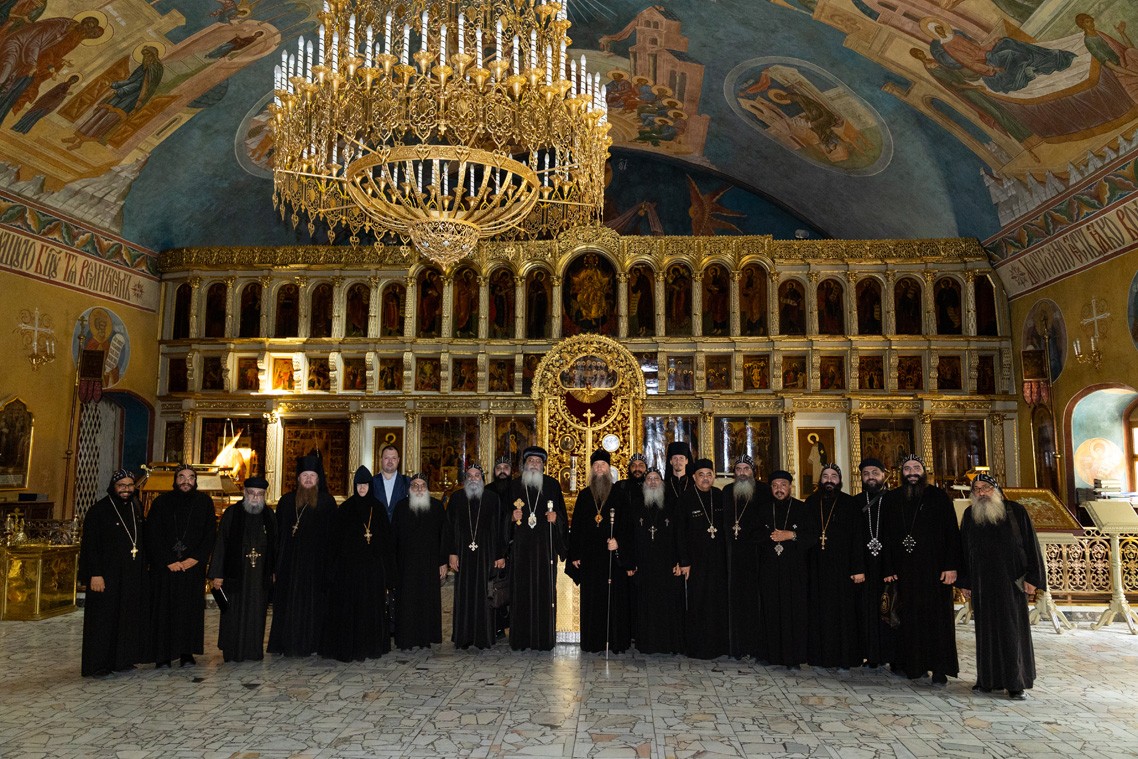
The Coptic Church representatives thanked the bishop for his warm welcome and presented him with an olive-wood cross adorned with precious stones and incense from Jerusalem. In return, Bishop Kirill gave the guests an icon of the Holy Trinity.
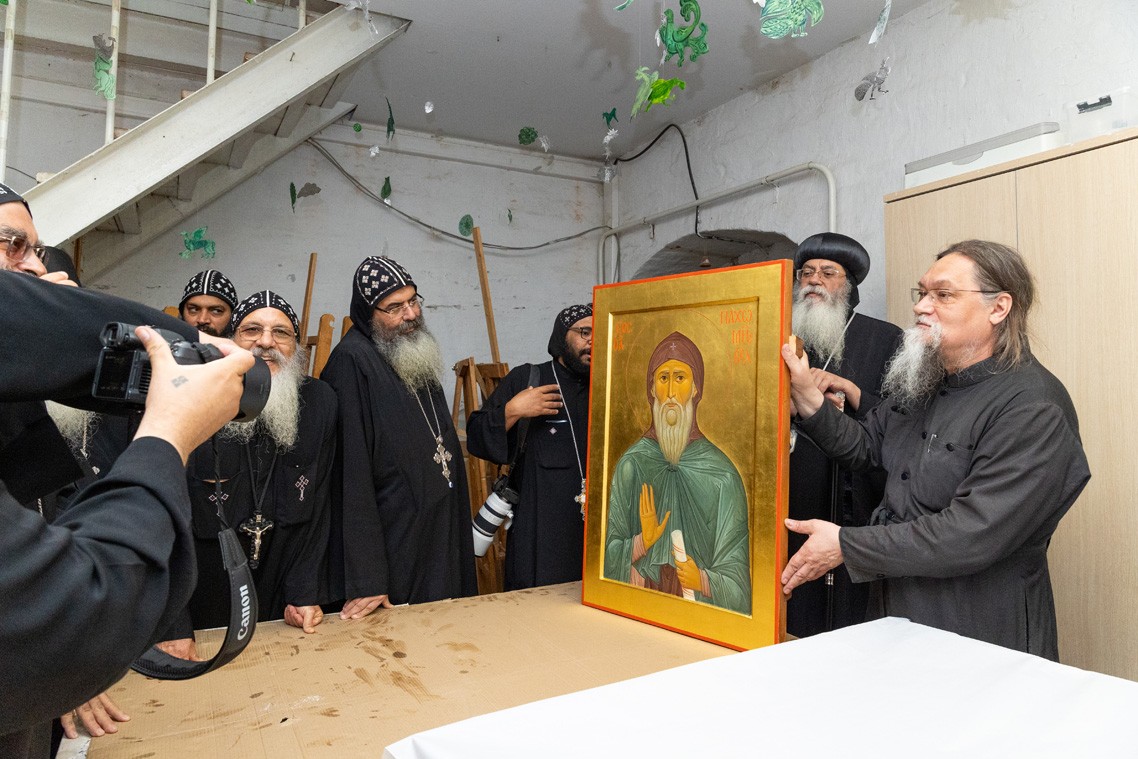
After meeting the rector, the guests visited the Icon Painting Faculty’s workshops and learned about the students’ education. Archimandrite Luka (Golovkov), dean of the faculty, showed the delegation around and spoke about the Russian icon painting tradition preserved at the Academy and about Nun Juliana (Sokolova), whose work helped revive that tradition in the twentieth century.
MThA Press Office