

"Open The Ears Of Your Heart, O Brother!": Bishop Kirill Performs Monastic Tonsure Of Academy Student
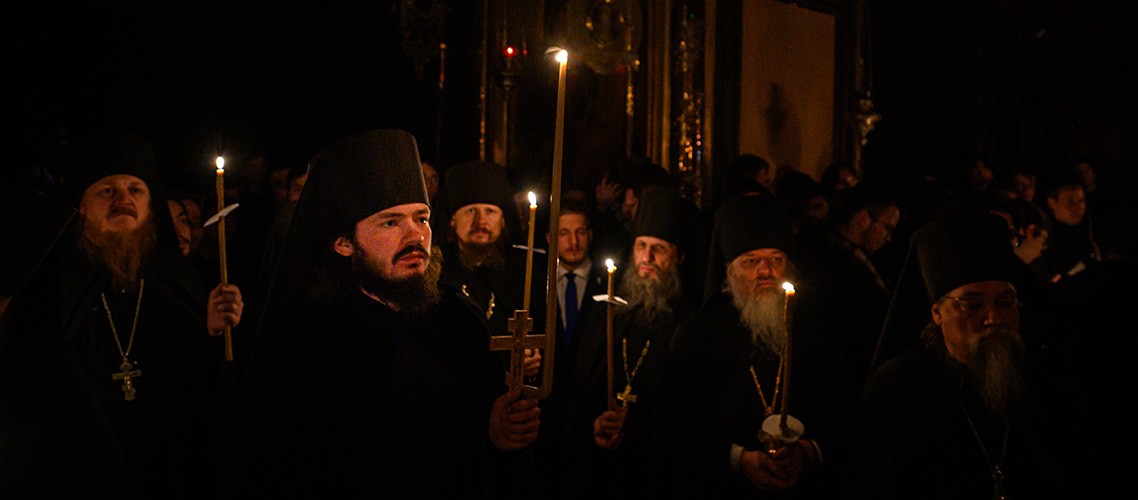
On the evening of March 6, another novice champion of the angelic life opened his heart to God and embraced His words: "Come to Me, all you who labor and are heavy laden, and I will give you rest".
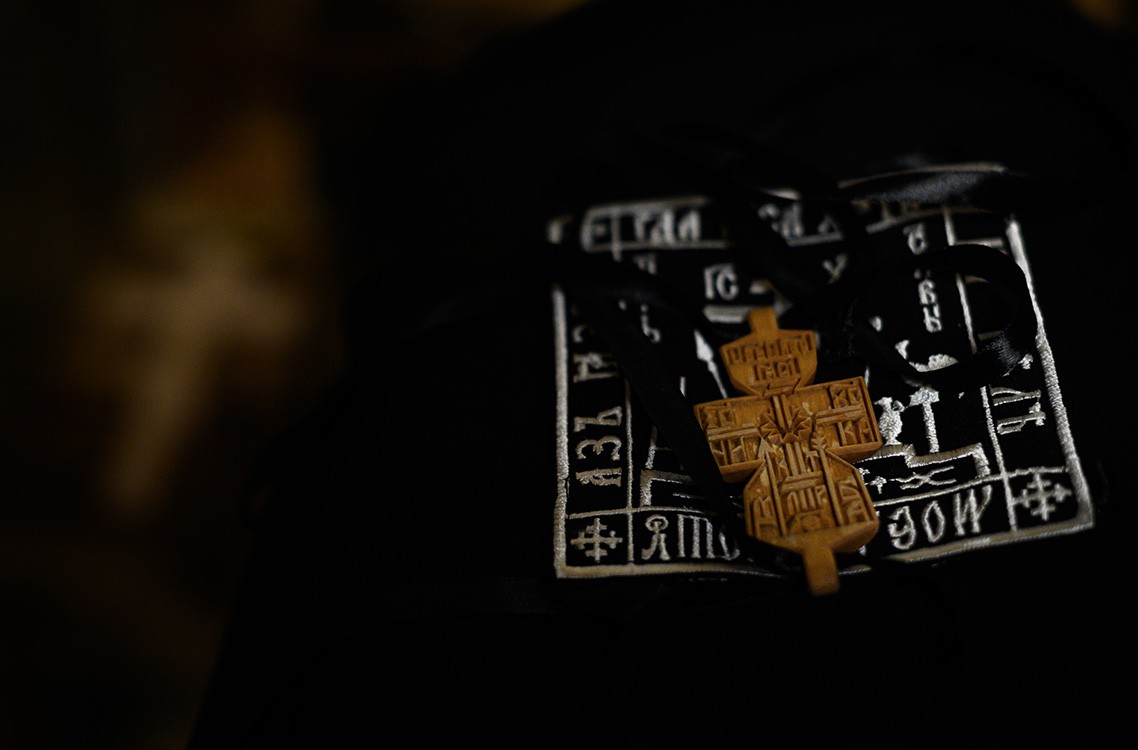
Academy clergy, faculty, and students witnessed the mysterious birth of a brother into a new spiritual life - Monk Simon (Mishakov).
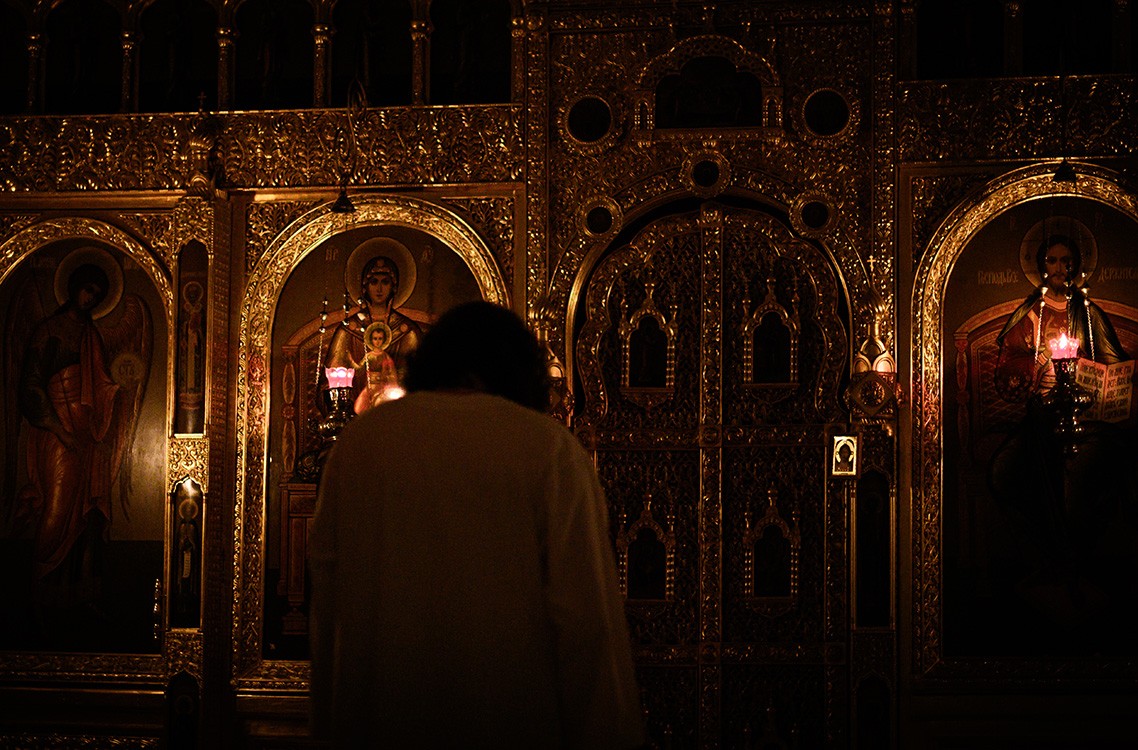
On Friday evening of the second week of Great Lent, Bishop Kirill of Sergiev Posad and Dmitrov, Rector of the Moscow Theological Academy, performed the monastic tonsure of Reader Seraphim Mishakov in the Trinity Cathedral of the Holy Trinity-Sergius Lavra. The student was named in honor of Archimandrite Simon of Radonezh, a disciple of St. Sergius.
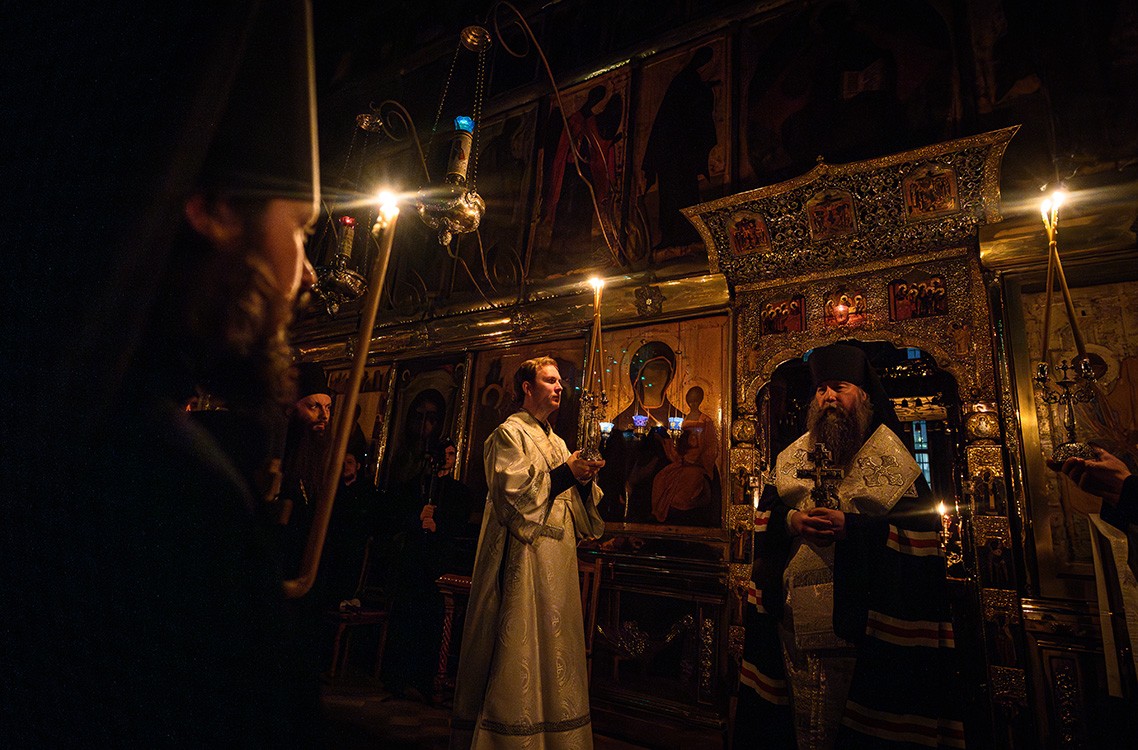
Following the rite, Bishop Kirill addressed the newly tonsured monk with a word of instruction.
In the name of the Father and the Son and the Holy Spirit!"In the name of the Father, and of the Son, and of the Holy Spirit!
Dear fathers, brothers, and sisters, we congratulate the newly tonsured Monk Simon, the entire brotherhood of this holy monastery, and the academic brotherhood on the addition to the number of those who have disposed their souls and hearts to embrace the monastic way of life.
Today, following the rite of tonsure, which the ancient Fathers of the Church considered a Sacrament, we sing the remarkable chant: 'Let us recognize, brothers, the power of the mystery...'.
During the rite of tonsure, we have just heard many instructions from the Holy Fathers, reminding those who have long been tonsured, and especially our brother Simon today, of the primary thoughts and feelings a monk must hold in his heart, supporting his established desire with a constant remembrance of grace-filled teachings. Throughout all the days of your life, both when you are joyful, brother Monk Simon, and especially when it is difficult, remember and fulfill the spiritual counsel of experienced ascetics to return your heart more often to these holy words of the monastic tonsure. This was specifically enjoined by St. Theodosius of the Kiev Caves, who exhorted his brotherhood to recall the mindset and state of soul they had when they first came to the holy monastic life, as well as the words they heard during their tonsure, paying attention to every single moment and every virtuous reminder to strengthen themselves for the feat of spiritual life.
We remember that monks are those who strive to preserve the evangelical lifestyle of the Apostles; those who, at a time when the Church of Christ began to be filled with lukewarm people, greatly desired to preserve the spirit of devotion to our Lord Jesus Christ and maintain the high standard of the Gospel commandments.
Of course, we see various examples in the life of the Church, and sometimes, especially in our time, one can find laypeople who fast and pray no less, or even more than monks. However, perhaps one of the most difficult feats for any person - yet one taken as the credo of our life in monasticism - is the feat of cutting off one's own will.
A layperson has more excuses; he has a family, property, and plans. A monk, however, must learn to completely cut off his own will. We are called to do this after the image of the Apostles and the first Christians, following Christ and believing that in the Church of Christ, through the hierarchy, it is precisely the Divine will that is fulfilled, directing our life path. The feat of obedience is especially imputed to us after Adam and Eve directed their will toward a path opposite to what the Lord commanded.
Our Lord Jesus Christ Himself is the greatest example for us of the desire for total obedience to the Heavenly Father. All ascetics of piety teach and instruct that even a small thing done not by one's own will proves much more difficult than many things done by one's own will.
According to St. John of Damascus, it was the will that was damaged most of all and first of all in the Fall. It is precisely here that you must apply labor upon labor. This internal feat, more than any other, requires those spiritual weapons of which we heard today in the Epistle to the Ephesians during the tonsure.
The words of Apostle Paul describe virtues as images of military equipment required for the struggle against the spiritual hosts of wickedness in the heavenly places. But, first and foremost, this struggle takes place within ourselves, in our hearts, in our minds, and in our thoughts. Here, try to be very attentive and consult more often with your elders, with Father Hilarion, to clearly understand where certain thoughts originate. This spiritual experience is essential for any Christian, but especially for a monk. We know that the ancient Desert Fathers, in their spiritual labors, studied the human soul deeply, like the best psychologists enlightened by the grace of Christ. They noted that thoughts sometimes arise in our consciousness in such a way that we understand they come from without, and this is a specific, tangible struggle. But no less often, they arise in the consciousness such that a person does not notice that the thought was cast by a spirit of wickedness. it is covered with pious thoughts and feelings, yet it contains a certain flaw that an inexperienced person, and sometimes even an experienced one, may not realize immediately.
For this reason, one needs spiritually experienced elder brothers who can advise and help distinguish where danger truly lurks, as it will inevitably appear in the mind of anyone who has begun to serve the Lord.
I will also note that Christian virtues may sometimes seem contradictory to one another.
On one hand, there is courage, the image of a warrior; on the other hand, there is humility and poverty of spirit, of which the Lord speaks in the very first Beatitude. How are these combined? This is a spiritual mystery - a combination of things that seem incompatible to the worldly mind.
Indeed, every labor, every effort, and every good desire we must offer to Christ, laying as the foundation of our entire life's path the understanding that we can only think something good with the help of God. If we manage to accomplish something good, we must always say that the gifts the Lord gave us - life itself, all our desires, and our mental and physical abilities - must be brought to Christ, to His feet, without considering them as something special.
It is better to perceive our small service as the two mites of that widow who came and brought the little she had. By remaining in such an internal disposition, you will be safe, reminding yourself of what the Holy Fathers said: 'Only humility can be placed alongside God'. Everything of our own that we place there, even if it is great before men - knowledge, abilities, labors - if we consider it significant, then God will convince us that it means nothing before Him. But if we bring the very smallest thing, recognizing our infirmity, we will hear the words heard by Apostle Paul: 'My strength is made perfect in weakness'.
This weakness, of course, should not be a basis for laziness, but on the contrary, it is needed for even greater labor and greater attentiveness, because our weakness is such that it calls us to always invoke God's help. We must not rely on ourselves or our own strength, and all our successes, I repeat, must be attributed back to the feet of Christ, realizing that if He stepped away from us for even a second, we would not only fail to do good, but we would commit many errors, manifest and hidden, and sins great and small.
Your patron now, St. Simon, was among the closest disciples of St. Sergius, having come here from the then-distant Smolensk lands. Simply hearing about the Saint, he left his significant position, came ready to serve, and indeed became a simple novice under the holy abbot. He participated in the miraculous vision of St. Sergius seeing many birds and was granted the honor of being buried by St. Sergius himself. May his loyalty and devotion to the holy Abba Sergius always be in your heart, strengthening you for every day and hour of monastic life.
And of course, while combining your studies, scientific activities, participation in divine services, and all other labors, remember that the eyes of people are especially fixed upon monks, as they expect to see something different through them - not what they are accustomed to seeing in this world. This 'something different' must, with God's help, manifest even in how we speak, how we look, and how we move - in everything. Even if we succeed in something great, but become a stumbling block for others in something small, this too can become a temptation for someone, which sometimes one does not yet know how to 'pray away'. Let us understand that, despite our weakness, we must be vigilant at all times and, calling upon the help of Abba Sergius, be worthy to glorify him and the Holy Trinity Itself, consubstantial and undivided, to which may the Lord grant you by the prayers of St. Simon. Amen".
Background information
Chanting performed by the first academic choir under the conduct of E.V. Borovinsky.
MThA Press Office