


Department of Biblical Studies Hosts Lecture on Feminist Interpretations of St. Paul’s Epistles
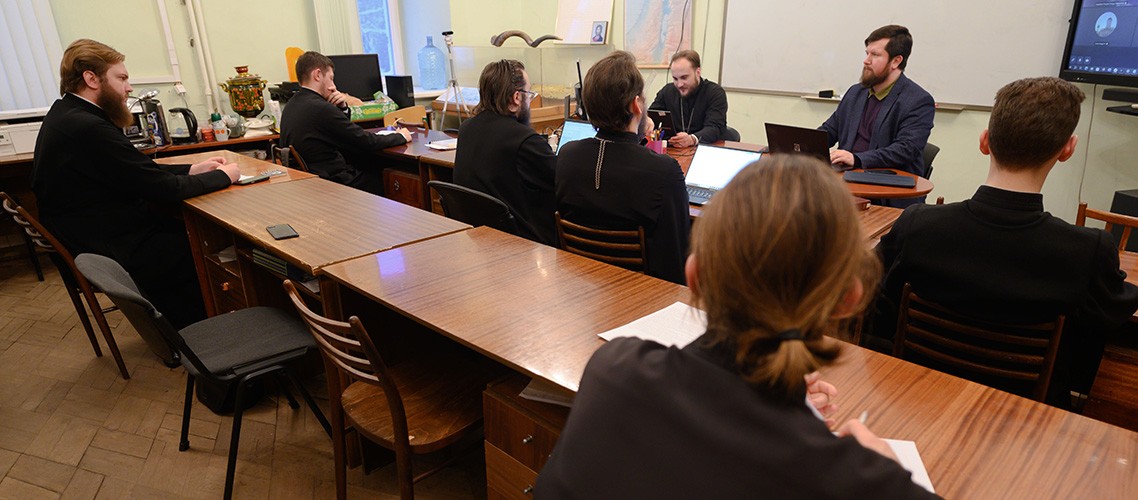
On January 28, 2026, the Biblical Room of the Moscow Theological Academy hosted a regular meeting of the research school "The Heritage of the Apostle Paul in Patristic Exegesis, Pre-Revolutionary Russian, and Modern Biblical Studies" and the student research and theological society "Orthodox Paulinism".
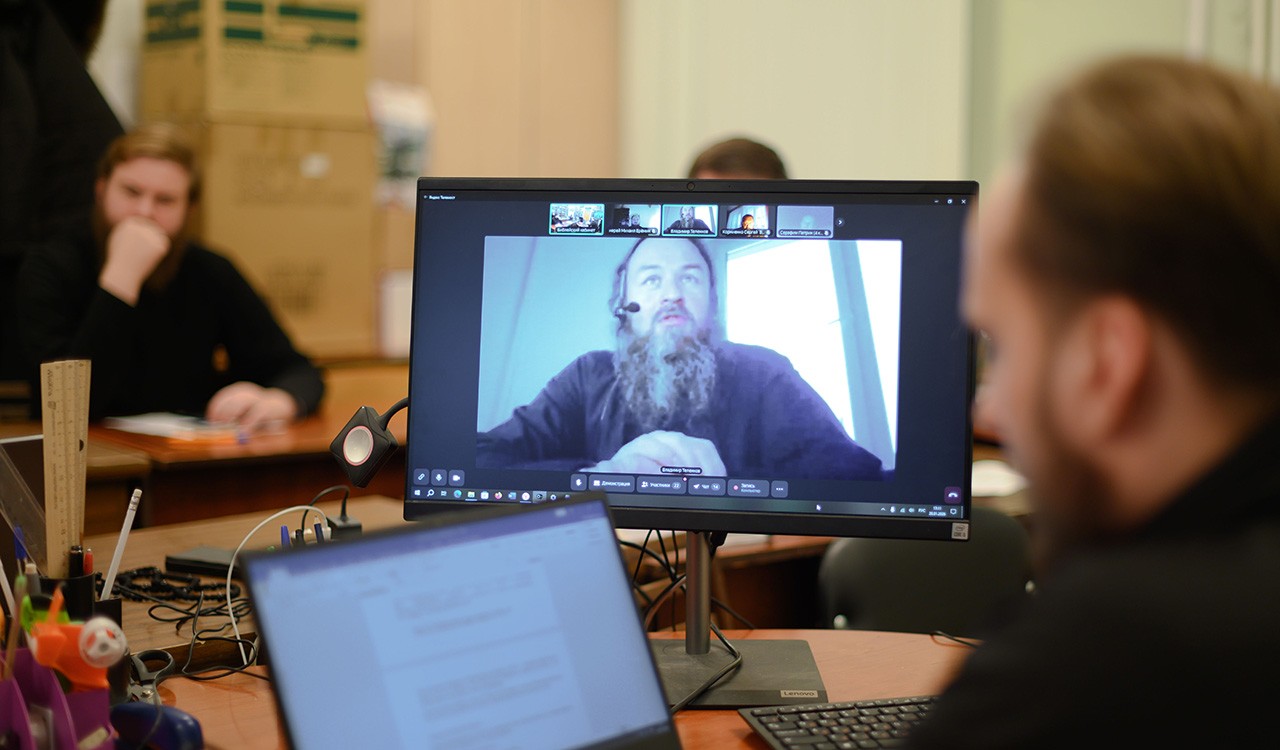
The event, held in a hybrid (in-person and remote) format, brought together approximately 30 participants - faculty and students from the Moscow Theological Academy, as well as the Tula, Yekaterinburg, Pererva, and Yekaterinodar theological seminaries.
The meeting was moderated by M.V. Kovshov, Associate Professor of the Department of Biblical Studies at the MThA.
Particular emphasis was placed on the inter-university nature of the society, which has become a hallmark of such platforms for discussing complex theological topics over the years.
Opening the meeting, Mikhail Vsevolodovich stressed the exceptional importance of such discussions for clarifying one’s academic position, especially in anticipation of PhD thesis defenses. According to him, analyzing controversial and ideologically charged issues among colleagues allows for a deeper understanding of both the Holy Scriptures and one’s own theological vision. This makes such meetings especially valuable for young researchers.

The keynote report was presented by Priest Roman Belashov, a PhD student at the department and Assistant to the MThA Vice-Rector for Disciplinary Affairs. His presentation focused on the "Feminist Interpretation of the Epistles of the Apostle Paul". The speaker examined in detail the emergence of feminist biblical studies in the second half of the 20th century, its connection to the "hermeneutics of suspicion" and key methodological difficulties related to the retrospective projection of the concept of "patriarchy" onto ancient and ecclesiastical contexts.
Special attention was given to the corpus of St. Paul’s Epistles, which combines universal theological principles (unity in Christ) with specific pastoral instructions prompted by the historical circumstances of various communities. Priest Roman analyzed four main strategies of feminist reading: reconstructive, suspicious, liberating, and deconstructive - and demonstrated how, in most cases, ideological bias predetermines the choice of interpretation.
The speaker dwelt on key controversial passages: 1 Cor. 11 (head covering), 1 Cor. 14 (women’s silence in church), and Eph. 5 (the household code). It was emphasized that the theological center of these passages lies not in social hierarchy, but in Christology, the Eucharistic theology of the gift, and the interdependence of the sexes in Christ. The sacrificial love of Christ for the Church was highlighted as the archetype for the relationship between husband and wife.
The report was followed by a lively discussion. Participants addressed issues of historical context - the status of women in ancient society and Christianity’s contribution to changing that status - the relationship between the "cultural shell" and the theological core of the texts, and the pastoral aspects of applying St. Paul’s instructions in modern church life. Suggestions were made for further development of the topic within the framework of dissertation research.
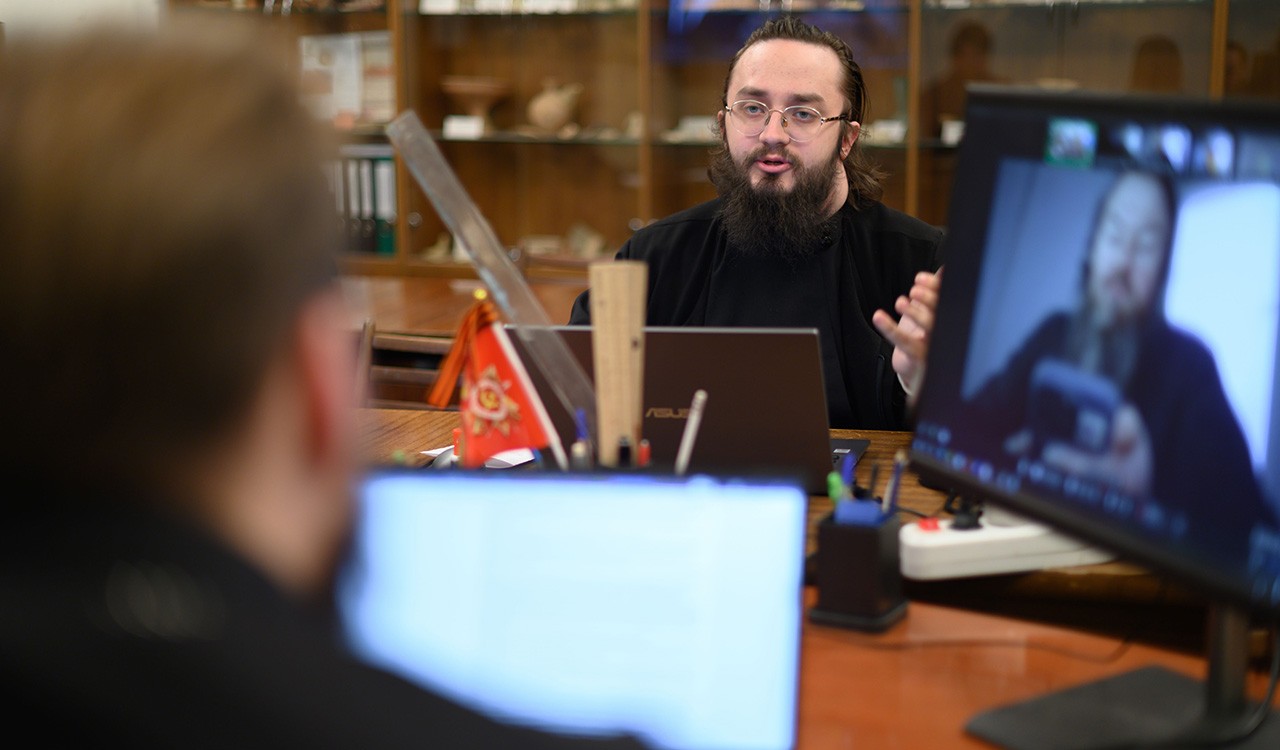
During the discussion, important points were raised regarding the need for a more active apology: demonstrating exactly how 1st-century Christianity radically improved the status of women compared to the surrounding pagan and Jewish environments. Participants noted that the Apostle Paul, while using the language and forms of his era, infused them with new Christocentric content, transforming familiar social structures into an image of the relationship between Christ and the Church.
Concluding the meeting, Mikhail Vsevolodovich thanked all participants for the meaningful discussion and noted that such debates help identify weak points in research and outline directions for future work. The materials of the seminar will be beneficial for PhD students and faculty of theological schools involved in modern biblical exegesis and apologetics.
MThA Press Office