


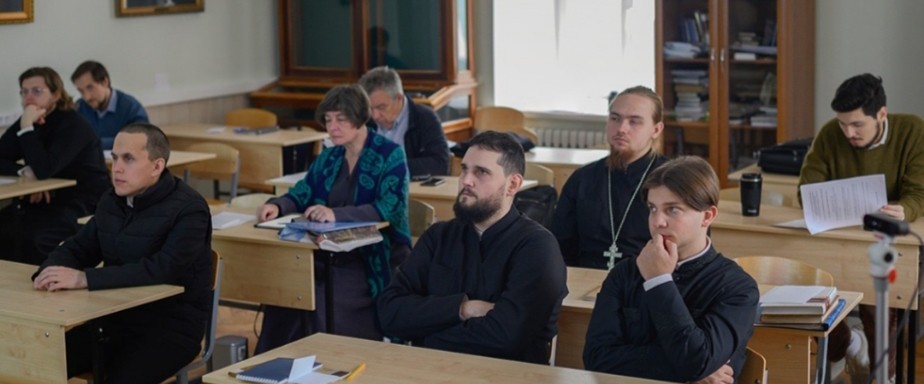
MThA Hosts Conference "Occidens orthodoxus: Latin Christian Literature of the First Millennium"
On November 11, 2025, the Third Interuniversity Conference "Occidens orthodoxus: Latin Christian Literature of the First Millennium" was held at the Moscow Theological Academy. It was attended by researchers, faculty, and students from MThA, St. Petersburg Theological Academy (SPbDA), Moscow State University (MSU), St. Tikhon's Orthodox University (PSTGU), and the Institute of Special Education.
The conference's plenary session was opened with a report by Hegumen Dionysius (Shlenov) (MThA) titled "The Ecclesiology of St. Leo the Great in Catholic Interpretation of the 18th Century". According to the speaker, St. Leo continues the line of his predecessors to the See: Popes St. Damasus I, St. Siricius, and St. Innocent I, who were, in various ways, bearers of the idea of Rome's ecclesiastical-administrative primacy. He also understood the decisions of Western councils Sardica (343) and Aquileia (381) as supporting this primacy. However, the teaching of St. Leo was not as definitively categorical as it later became, including in Latin scholasticism and as presented in the polemical theological literature of the 18th century.
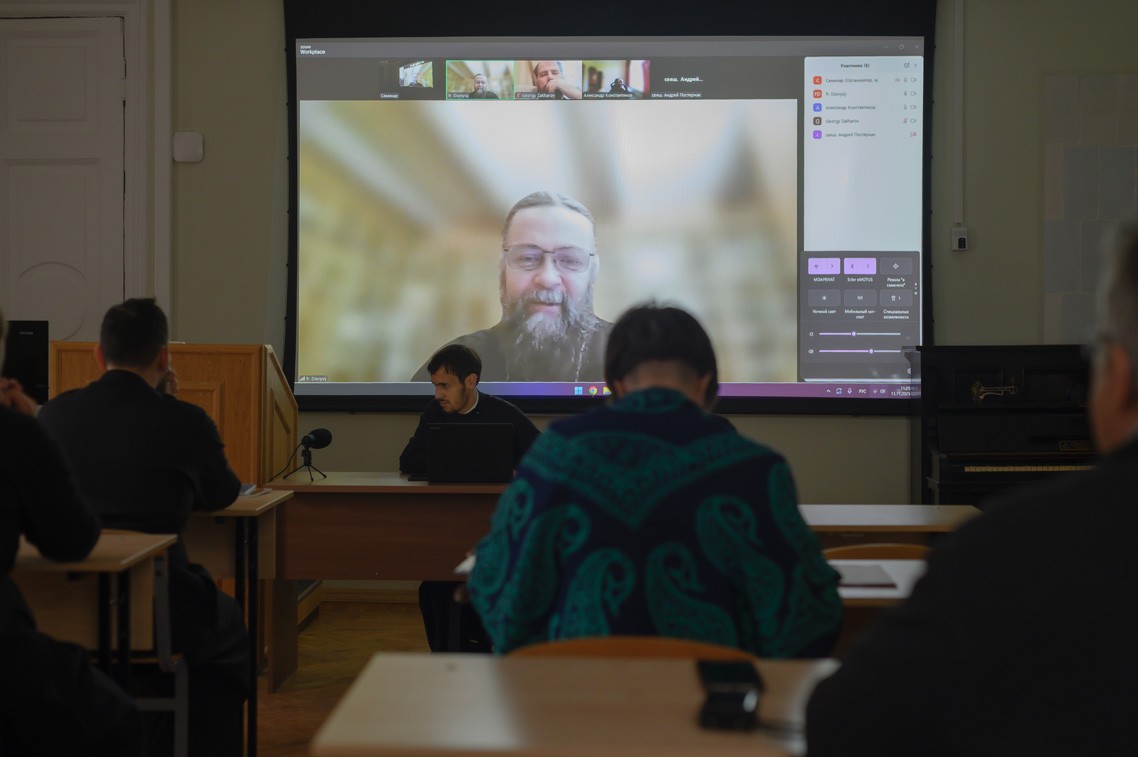
The report by G.E. Zakharov was dedicated to the problem of the reception of the Nicene legacy in the Roman Church from the mid-4th to the early 5th century. The texts of Roman bishops and Roman councils of this period are characterized by a noticeable Nicenocentrism, expressed in the absolutization of the significance of the canonical and doctrinal decrees of the Council of Nicaea and their presentation as an ecclesial norm safeguarded by the Roman Church. Special attention was paid to the question of the practice of reviewing decisions of regional councils. This theme was not explicitly expressed in the preserved Nicene decrees, yet Pope Julius I already attributed to the Council of Nicaea the approval of the practice of reviewing the decisions of one council by another. Based on a number of testimonies from early Christian writings of the 4th–5th centuries, the speaker proposed the hypothesis of the existence of a now-lost letter from the Council of Nicaea on the Donatist issue, which confirmed the decisions of the Roman and Arles councils of 313–314, but at the same time presupposed the possibility of reconciling the Donatists with the Catholic Church.
Next, Priest Andrei Posternak (PSTGU) presented a report titled "Features of Diaconal Ministry in the Latin West according to the Testimonies of Sts. Ambrose, Jerome, and Augustine". He examined the testimonies about diaconal ministry from St. Ambrose of Milan, St. Jerome of Stridon, and St. Augustine of Hippo, highlighting the liturgical and non-liturgical functions of deacons. According to the speaker, the liturgical functions named were common. Local norms should include the status of deacons as important letter-carriers, participants in theological disputes, educated catechists, individuals responsible for parish charity, as well as potential candidates for episcopal office.
In the report by Priest Ioann Kechkin (MThA), the image of Emperor Constantine in the anti-Donatist treatise "Against the Donatist Parmenian" by Optatus of Milevis was examined. The figure of Constantine is important for studying the first years of the development of the Donatist schism, and thus Optatus described the participation of the Christian emperor, relying on a collection of documents. In his polemic against the schism, Optatus emphasizes Constantine's peacemaking policy towards the North African schism. It can be said that for Optatus, Emperor Constantine, despite the fragmentary description, embodied the image of an ideal Christian ruler.
In the report by Archimandrite Abel (Konstantinov), the exegetical method of St. Jerome of Stridon was examined using the example of his interpretation of the Parable of the Workers in the Vineyard (Matthew 20:1–16) from his "Commentary on the Gospel of Matthew" (398) as a paradigmatic model of patristic reception. The speaker analyzed a two-level hermeneutical scheme: tropological interpretation (correlating the "hours" with the ages of human life) and historico-typological interpretation (periodization of sacred history from Adam to the Apostles). Through detailed comparison of parallel texts, the creative transformation of Alexandrian exegesis by Origen and its synthesis with the Latin tradition (Fortunatian of Aquileia, St. Hilary of Poitiers, St. Ambrose of Milan) was demonstrated.

Next, in his presentation, M.A. Timofeev, Head of the V.P. Kashchenko Scientific and Educational Center at the Institute of Special Education, Cand. of Historical Sciences, highlighted the important problem of the necessity for meticulous study of the history of editions and translations of patristic literature, noting its extreme relevance for fostering a high culture of scientific research, primarily among students of educational institutions. He presented a brief but comprehensive overview of editions of the Register of the Letters of Gregory I the Great (the Dialogist) and its translations into modern languages, including Russian, made from the early 19th to the 21st century. The speaker drew attention to the specific structure of each of nearly 20 translation publications, the peculiarities of translation, and the diversity in the use of the source text of the Register in Latin. Special attention was paid to the problem of the emergence and evolution of scholarly reference apparatus, as well as the principles of arranging the main text of the letters and appendices.
The report by Hierodeacon Grigory (Trofimov) (MThA, PSTGU) examined the question of the image of the "elect" (electi) in the theology of St. Gregory the Great. The speaker identified the main features of St. Gregory's soteriology, noted both its connection with the theology of the late Augustine and some points of divergence from the concept of the Bishop of Hippo. Particular attention in the report was paid to the concept of the "Church of the elect" (Ecclesia electorum) in the exegesis of St. Gregory the Great, and the question of the relationship between predestination and church prayer for the living and the departed.
The report by Deacon Alexei Makhonkov (MThA) was dedicated to comparing the polemic against mantic practices in the work of Pseudo-Justin "Quaestiones et responsiones ad orthodoxos" (circa 5th–6th centuries) and the "Etymologies" of Isidore of Seville (early 7th century). The goal of the research was to reconstruct and compare the approaches of two authors active roughly in the same era but in different cultural spheres (the Greek East and the Latin West) and to examine the hypothesis of the existence of common literary sources. By analyzing specific practices, such as the interpretation of bodily twitches, as well as through a general comparison of theological approaches and critique of pagan practices, it is demonstrated that the similarities between the authors are due more to belonging to a common patristic tradition than to direct borrowings.
The report by Protodeacon Konstantin Markovich (SPbDA) was dedicated to presenting and comparing the views of two influential church figures of the reign of King (from 800, Emperor) Charlemagne regarding the performance of the rites of catechumenate and baptism: Alcuin and Amalarius of Metz. Alcuin was concerned with the problem of spiritual enlightenment of pagans, the Avars, and he insisted that the rites of catechumenate and baptism, along with instruction in the faith, must be performed with all thoroughness. This viewpoint is reflected in the manual he wrote, Primus paganus. Amalarius, on the contrary, focused on issues related to the baptism of infants. In his letter to Emperor Charles "On Scrutiny and Baptism" (Epistola de scrutinio et baptismo), as well as in Chapter 24 of Book I of De ecclesiasticis officiis, Amalarius formulated an original theory that the rites of catechumenate performed on infants have, like baptism, a sacramental significance, since through them the newly baptized infant receives the gift of faith from the Holy Spirit, which will unfold in his soul as he matures.
In the report by N.A. Ganina (MSU), the references to Church Fathers in spiritual literature intended for Strasbourg nuns of the 1470s were discussed, namely in spiritual-mystical treatises found in a manuscript collection from the Strasbourg convent of St. Mary Magdalene (Moscow, Russian State Library, fund 68, No. 446). The research showed that the author of the treatises is Johannes Kreutzer (c. 1424–1468), an Alsatian Dominican, an outstanding preacher and spiritual writer. Kreutzer's treatises, the central one being "Spiritual May", were popular in women's monasteries of Alsace but remained unpublished and little studied until recent times (the edition was carried out by the report's author in 2016). The research helped to determine the circle of Latin Christian authors of the first millennium important for Kreutzer and his audience.
In the report by E.G. Malyuta (MThA), an interesting comparison was proposed of some aspects of two well-known legends, separated by almost a thousand years, about Byzantine emperors sending consular and imperial insignia to outstanding rulers of their time as a kind of recognition of them as strong political figures. A comparative interpretation of these accounts allows for the identification of some key points expressing the perception of contacts with Byzantium in such a key as a necessary condition for legitimizing power, one of the pillars of authoritarian rule, and a strong argument in the diplomatic arena.
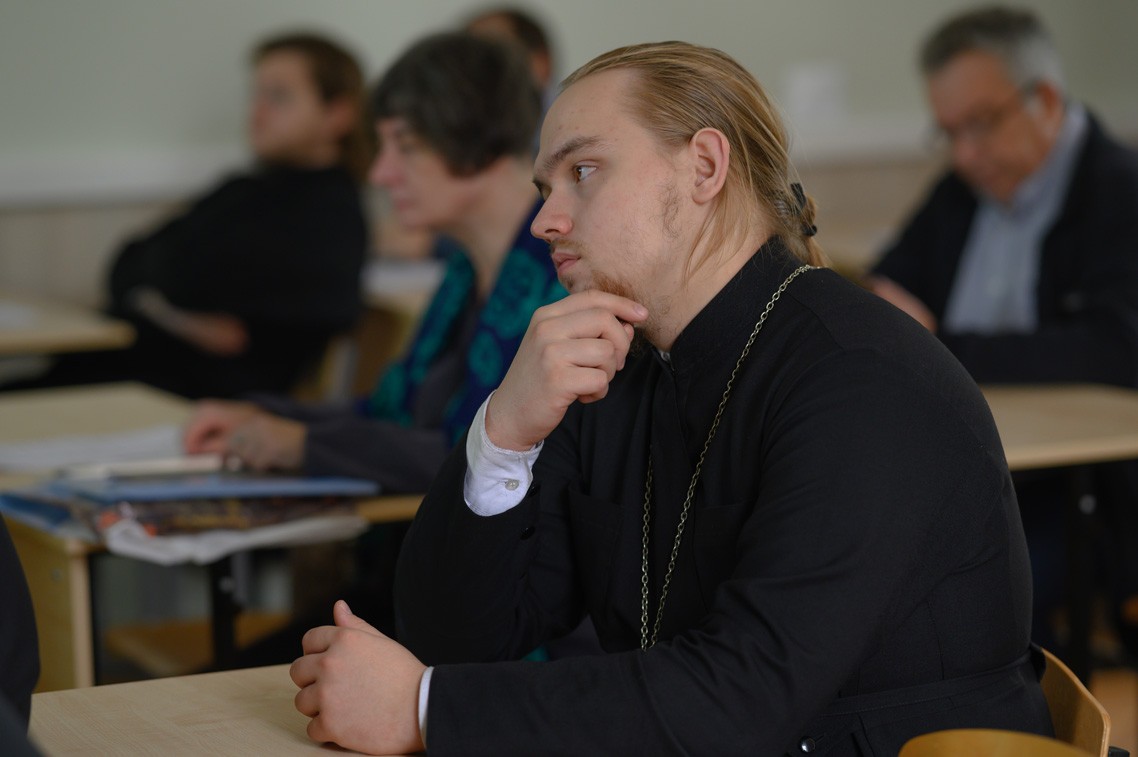
In the report by A.D. Petrovsky (PSTGU) titled "Spanish Adoptionism of the 8th Century: History of Study in Modern Times", a brief analysis of the main trends in the historiography of this Christological heresy from the beginning of the last century was given. If in preceding centuries Adoptionism was perceived as a kind of neo-Nestorianism or even neo-Arianism, throughout the 20th century a view gradually formed that the starting point of this teaching was the writings of some early Latin and Spanish church authors. This allowed the American patrologist J. Cavadini to advance the thesis of the "last exclusively Western Christology", which in our time has been criticized by the German researcher I. Knecht. Another theme noted in the report is the specificity of Spanish and Catalan historiography. For it, it is fairly characteristic to consider this theological dispute within the broader framework of the political and cultural conflict between the population of Spain and the Franks.
MThA Press Office


