

Scientific-Theological Conference "The Western Captivity of Russian Theology: Pro et Contra" Held at the Academy
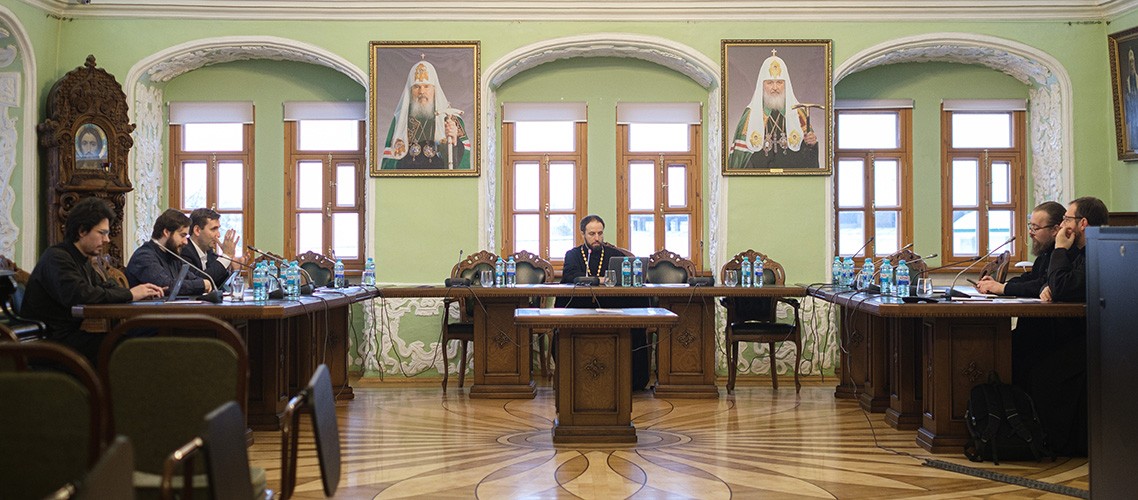
On November 25, 2025, the VI All-Russian Scientific-Theological Conference "Orthodox Theology: Traditions and Modernity" was held at the Academy.
Researchers from theological schools and secular scientific centers gathered at the event, dedicated to the upcoming 430th anniversary of the birth of St. Peter (Mogila), to discuss the influence of Western theological thought on the Russian tradition.
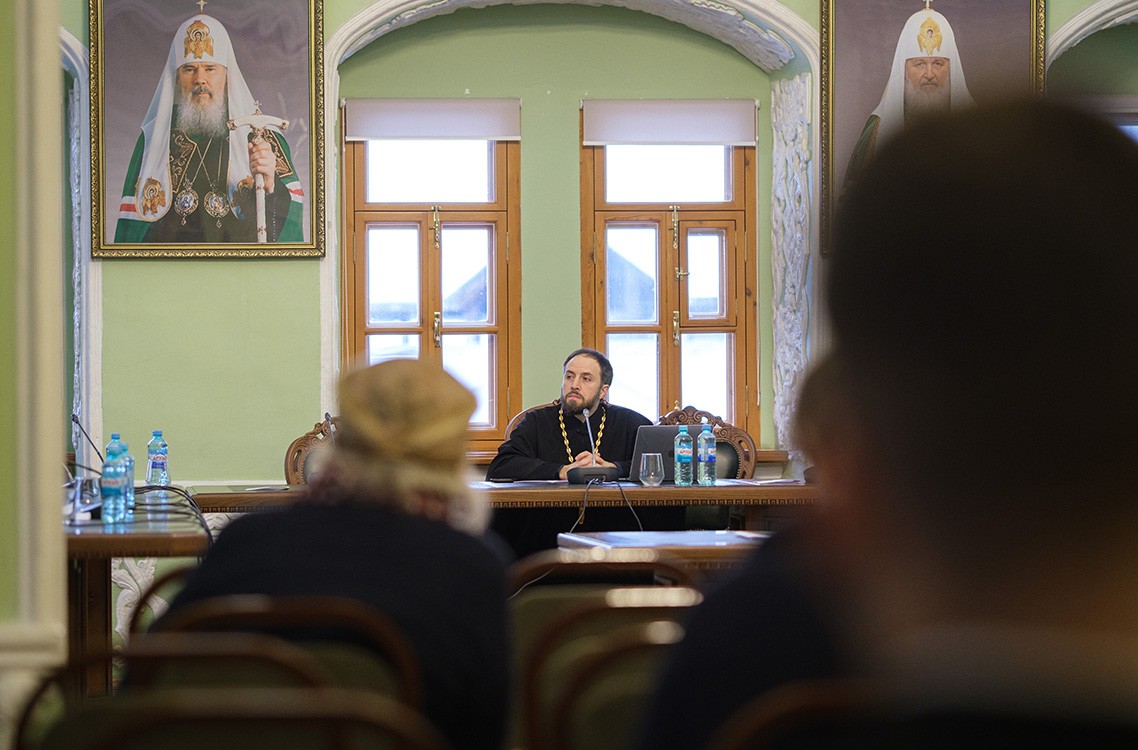
The moderator was Associate Professor of the Department of Theology, Priest Stefan Domuschi.
The scientific conference was opened by a report from K.V. Karpov (Institute of Philosophy, Russian Academy of Sciences) on the topic "The Theological Course of Feofilakt Lopatinsky (1706–1710): On the Question of the Western Captivity of Russian Theology". The speaker presented a critical analysis of the well-known thesis of "Western captivity" using the example of the manuscript heritage of Feofilakt Lopatinsky, casting doubt on established assessments of the originality and methods of Russian academic theology at the beginning of the 18th century. Research based on materials from the Russian State Library (RGB) collections showed that the argumentation in favor of absolute "captivity" is simplified and requires revision.
During the session, 12 reports were presented, covering a wide range of issues—from the analysis of theological courses of the 18th century to contemporary problems in liturgics and mission.
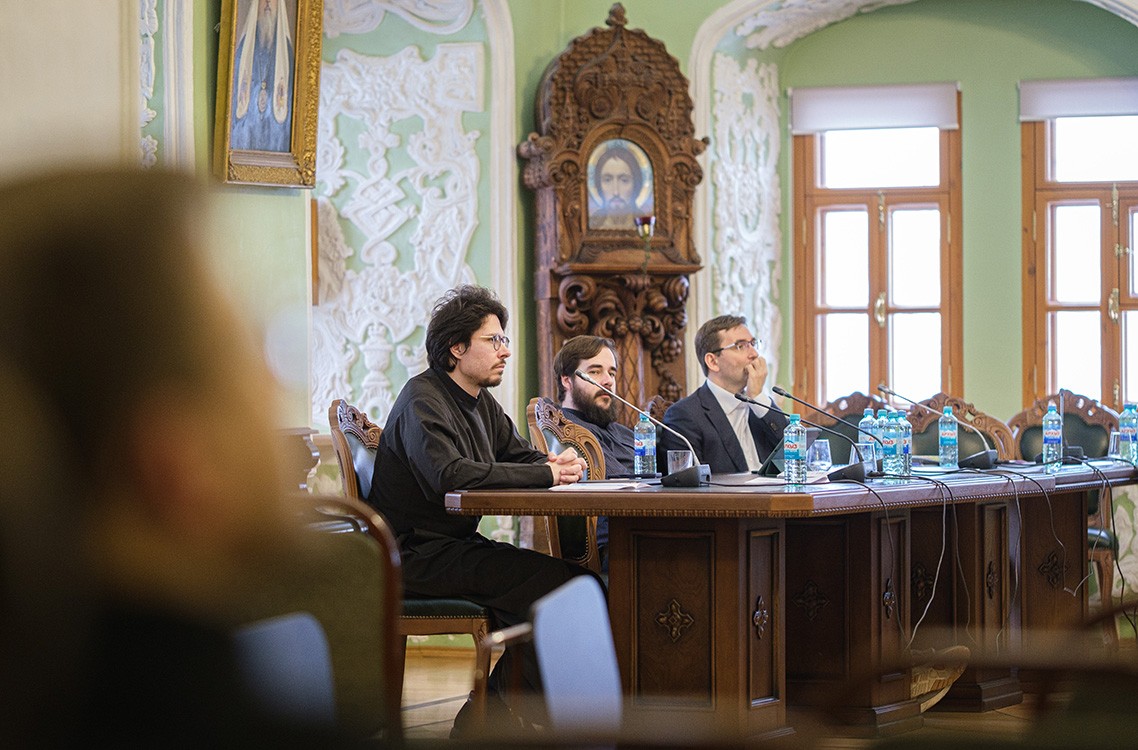
This theme was continued by M.V. Shpakovsky (Institute of Philosophy, Russian Academy of Sciences) in the report "Proofs of the Existence of God in the Theological Course of Feofilakt Lopatinsky (1706–1710): Testing G.V. Florovsky's Assessments with a Concrete Example". Using the material from the section on proofs of God's existence, the speaker clearly demonstrated the untenability of Florovsky's categorical assertions about the scholastic nature and direct borrowing from Thomas Aquinas in the teaching of that period. A detailed analysis of the RGB manuscript F. 173/I, No. 255 led to the conclusion that Florovsky's judgments are overly generalized and do not reflect the actual content and sources of Lopatinsky's course.
An extensive report on the topic "The Influence of Western Christian Approaches on the Orthodox Understanding of Non-Orthodoxy: From the Self-Isolation of Confessionalism to the Indifference of Ecumenism" was presented by Associate Professor of the Department of Theology, Priest Antonii Borisov. The speaker noted that the impulse given by Yu.F. Samarin with his thesis of "Western captivity" sharply posed a practical question for Russian theological thought: how should the Orthodox relate to non-Orthodox, under whose influence, as it turned out, Russian theology had been for centuries? The answers to this question, according to the speaker, varied, and some of them, paradoxically, represented not the development of patristic tradition but the adaptation of non-Orthodox concepts. As examples of such influence, Fr. Antonii cited the ecclesiological constructs of Protopriest P. Svetlov, who sought to adapt the "branch theory", and A.S. Khomyakov, in whose teaching Catholic and Protestant ideas about the Church were curiously combined. This allows for the conclusion of a secondary non-Orthodox influence — already on the Orthodox understanding of the nature of non-Orthodoxy.
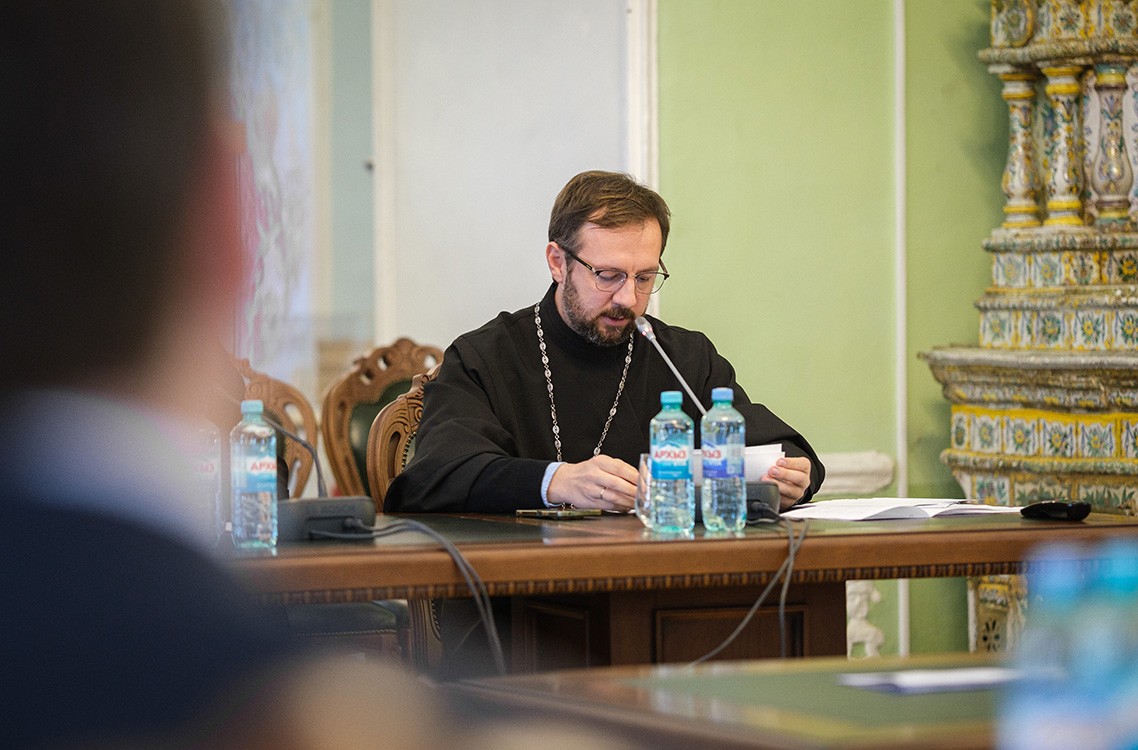
A report titled "Discussions on the Interrelation of Martyrdom and Asceticism in Russian Academic Theology of the Second Half of the 19th – Early 20th Century" was presented by A. Malyshev (PSTGU). He analyzed and compared two key concepts of the nature of martyrdom that existed in different theological schools: the understanding of martyrdom as a form of feat ontologically unrelated to asceticism, and, conversely, as a special form of asceticism. Based on the legacy of Protopriest A.V. Gorsky, A.P. Lebedev, P.P. Ponomarev, S.M. Zarin, and M.M. Tareev, the speaker drew conclusions about the theological peculiarities of the ideal of Christian feat formed at MThA, SPbDA, and KazDA.
Priest Stefan Domuschi, Associate Professor of the Department of Theology at MThA, addressed the topic "Western Influence on Conceptions of Conscience in Courses of Moral Theology in the 18th–19th Centuries". The report was dedicated to the influence of Western approaches to conceptions of conscience on the content of educational courses in moral theology in the 18th and 19th centuries. Defining captivity as the inability of the captive to perform free actions, the speaker emphasized that in the situation of the 18th century in the sphere of moral theology, it is preferable to speak of influence rather than captivity, since, while adopting definitions and formulations of moral concepts, in their homiletic and pastoral activities, Orthodox authors continued to express conceptions of conscience quite characteristic of Eastern theology.
Priest Alexander Sukharev, in his report "Protestant 'Captivity' of Catholic Liturgy", traced the influence of the Protestant tradition on the Catholic Mass after the liturgical reforms of 1969. The speaker identified three directions of influence, noting that the liturgy was influenced both by Protestantism's revival of forgotten elements of the Western tradition (beneficial influence) and by elements of new spirituality, leading to contradictory and partly distorting consequences. According to Fr. Alexander, such "captivity" acts like a vaccine, which can either strengthen the liturgical organism or finally weaken it.
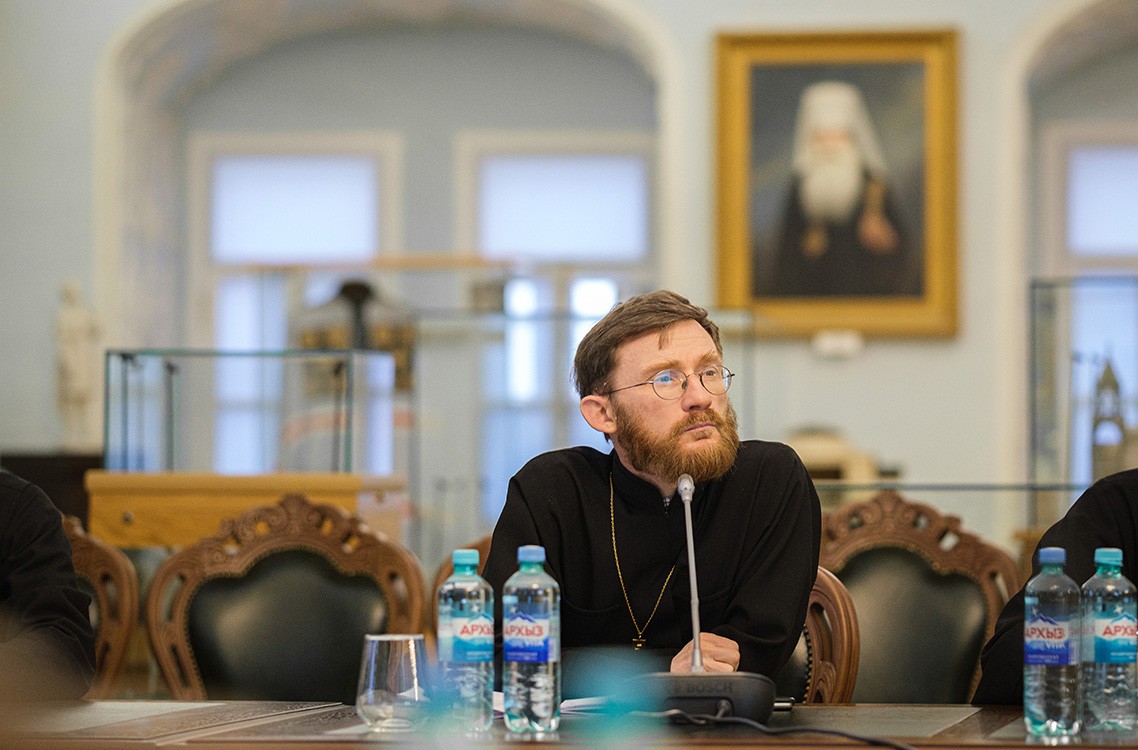
A programmatic communication titled "Dogmatic Theology: Prospects for the Academic Discipline" was delivered by Hegumen Adrian (Pashin). He reviewed the evolution of dogmatics textbooks, from pre-revolutionary to contemporary domestic and foreign ones, raised the question of the structure, goal, and objectives of the course in modern conditions, and outlined key current topics for its construction, such as the problem of terminology, the doctrine of deification (theosis), and hamartiology.
Priest Alexander Ermolin (Kazan PDS), in the report "'Western Captivity' of Russian Theology, the Search for Russia's Civilizational Path and Russian/Rossiiskaya Identity in the Context of Missionary Service Today", expanded the theme to the question of cultural identity and civilizational choice. The speaker noted that this question was at the center of attention of key figures of Russian history and thought, and theology is the nerve of this dispute. He called for a balanced assessment of the phenomenon of "Western captivity", highlighting not only its negative consequences, noted by Fr. Georgy Florovsky, but also positive aspects, such as initiation into the tradition of university education. The experience of the Russian emigration, in his opinion, can become an important resource for responding to missionary challenges today.
Deacon Sergei Kozhukhov (MThA, Institute of Philosophy, Russian Academy of Sciences) presented a report titled "Ancient Metaphysics as Science and True Knowledge of the Principles of Being of Its Time". The report showed that if in antiquity metaphysics was considered true science (ἐπιστήμη), then since the Modern era its status has fundamentally changed. The rationalism of Descartes, the critical philosophy of Kant, and the speculative system of Hegel successively excluded metaphysics from the sphere of scientific knowledge. Fr. Sergei demonstrated that the Church Fathers used ancient metaphysics as a relevant scientific tool of their time. The terminology and methodology of Plato and Aristotle became for them not a legacy of paganism but a full-fledged scientific language suitable for theological research. The speaker concluded: metaphysics in antiquity was not a speculative construct but a strict scientific discipline for studying the first principles of being, and it was precisely in this capacity that it was received by Christian theology.
N.I. Shelepova, in her presentation "The Significance of Patristic Anthropology for Modern Humanities", raised pointed questions: why did the motto "know thyself", proclaimed in antiquity, turn into a statement of defeat in self-knowledge in the 20th century, and what can patristic thought offer modern science? The speaker concluded that the works of the Holy Fathers contain the deepest answers to all spiritual-anthropological issues, and their achievements in the field of human knowledge remain unattainable and perennially relevant for philosophical anthropology and psychology.
The plenary sessions were concluded by a report from V.E. Elimanov (MThA) titled "'The Self-Seeing Light' (τὸ αὐτοπτικὸν φῶς) in the Theological-Philosophical System of St. Gregory Palamas". The speaker revealed one of the least studied aspects of Palamite theology, the doctrine of the Divine Light as a "self-seeing" principle, which is simultaneously the subject, object, and mode of the vision of God. A fundamental ontological divergence in the understanding of the vision of God between St. Gregory Palamas and Thomas Aquinas was demonstrated. V.E. Elimanov drew attention to the fact that the expression "God is contemplated by the mind" in Russian dogmatic systems of the 19th century could be understood more in a Thomistic than in a Palamite key, which indirectly points to the deep influence of Catholic scholasticism on the Russian theological school.
Summing up the conference, the Chairman of the Organizing Committee, Priest Stefan Domuschi, thanked all participants for their profound and substantive reports, noting that the wide spectrum of topics considered, from historical-theological to anthropological and missionary, testifies to a lively and enduring interest in the fundamental questions of Orthodox theology and the necessity of continuing research in this direction.
MThA Press Office


