


VI International Conference Dedicated to the Christian East Held
The VI International Conference dedicated to the Christian East was held at the Academy.
On November 18, scholars from Moscow, Sergiev Posad, St. Petersburg, Yekaterinburg, Pyatigorsk, and Yerevan (Armenia) gathered in the Small Assembly Hall to share the results of their research. Three researchers (participating in two presentations) joined remotely, as they were unable to come to Sergiev Posad for objective reasons: L. Khuchua and E. Abuladze from Tbilisi (Georgia) and Priest Alexander Treiger from Halifax (Canada).
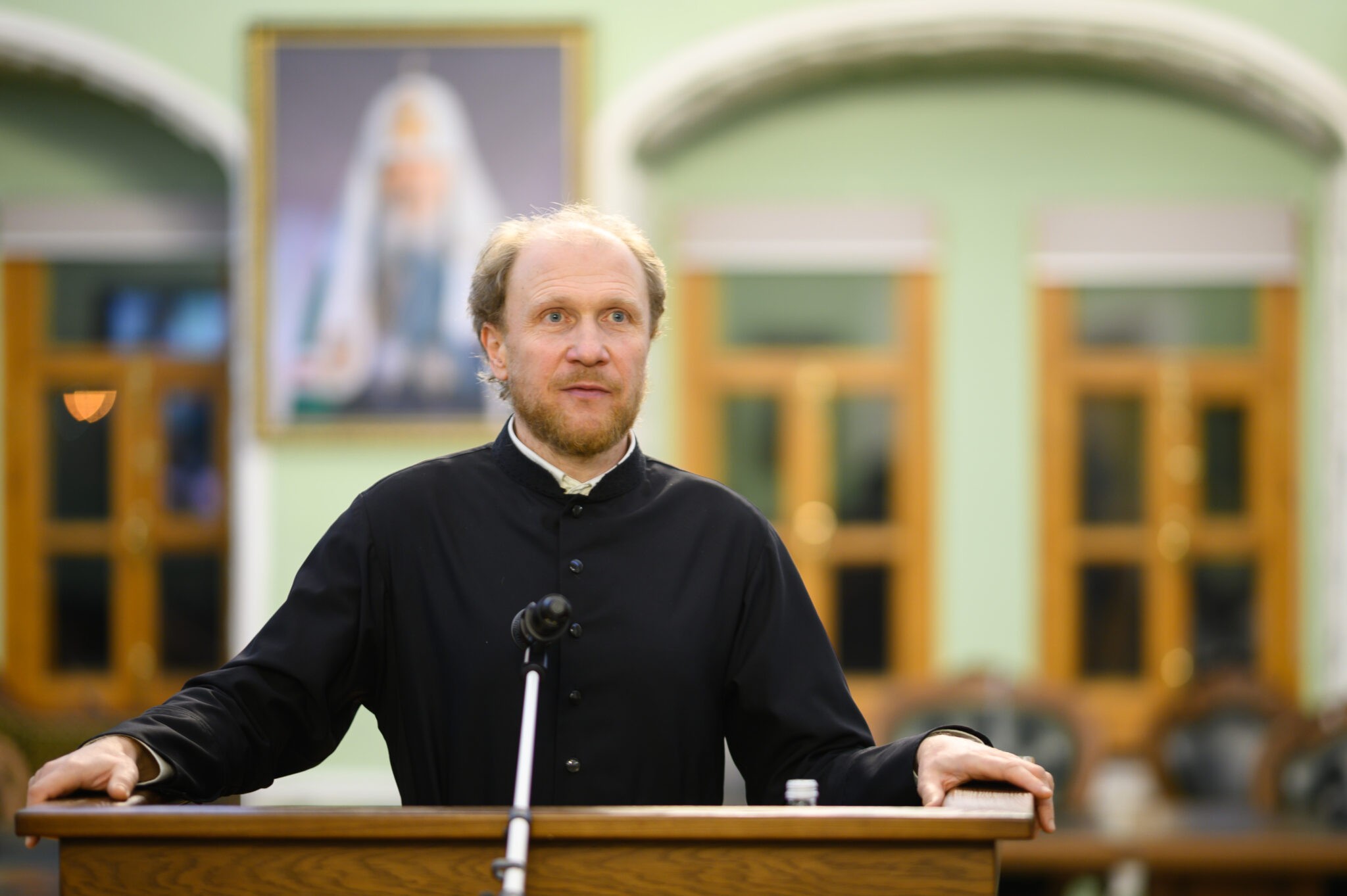
In his welcoming speech, the Head of the Oriental Studies Cabinet, Deacon Sergei Panteleev, noted first and foremost the importance of direct communication among scholars at conferences. Equally important, he noted, is the participation of representatives of the Christian East, the keepers of its traditions. Their testimony from within the tradition allows for a deeper understanding of the entire complex of problems related to the existence of Christianity in the Middle East and adjacent regions, avoiding an overly academic view on many issues.
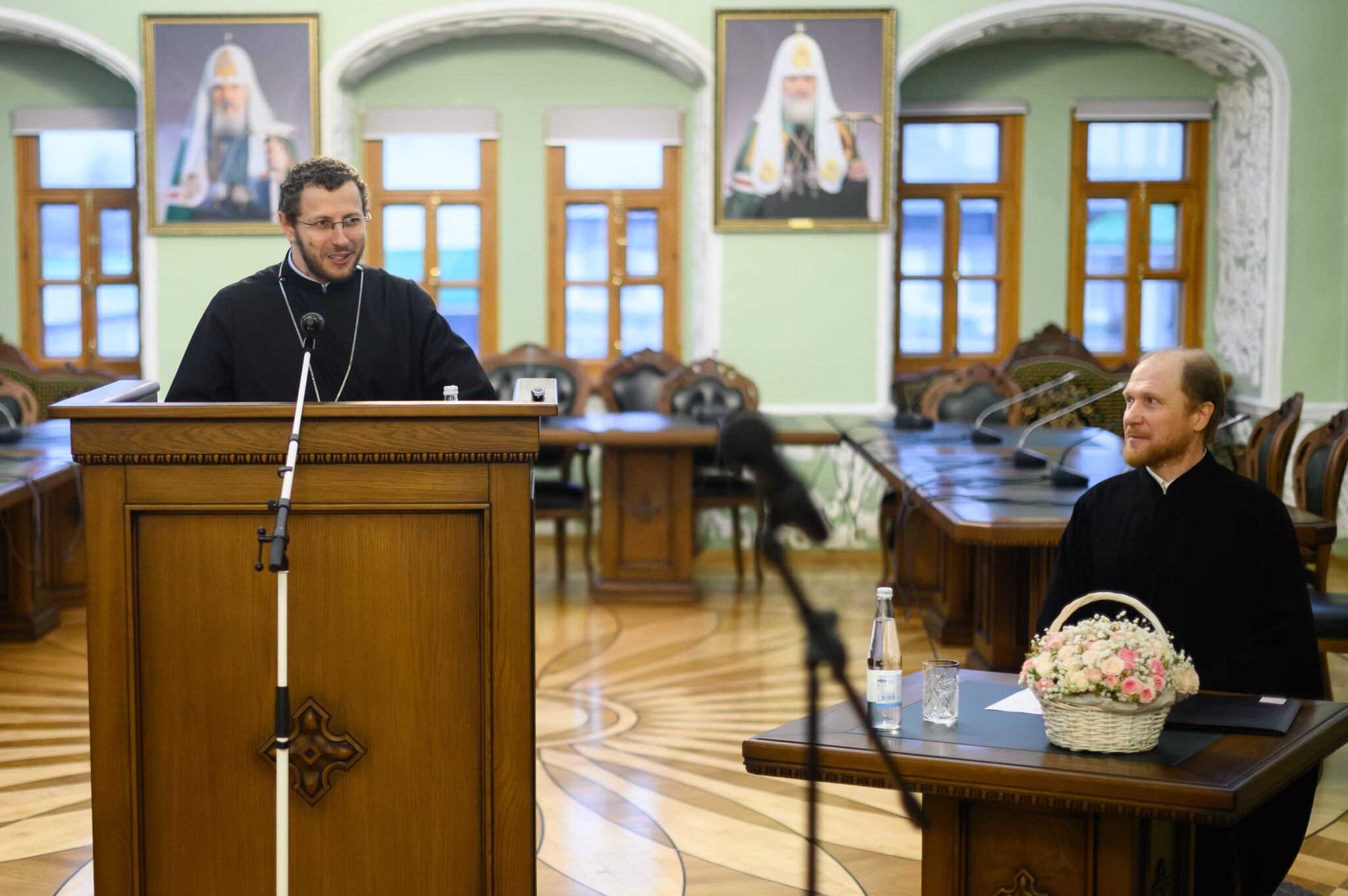
At the plenary session, observations on texts of the Eastern Christian tradition were shared by the Rector of the St. Gregory the Illuminator Seminary of the Armenian Church in the Northern Capital, Priest Gevond Temkin, and a lecturer from St. Tikhon's Orthodox University (PSTGU), N.G. Golovina. After a tea break, the participants' communication continued in sections, one of which can be conditionally called philological and the other historical.
The themes of the presentations could not fail to surprise with their diversity. And it's not just a matter of the broad title of the conference, but the extraordinary variety of forms and ways Christianity exists in the East. Both in past centuries and at present. This diversity is further contributed to by the small number of those in our country who study the Christian East.
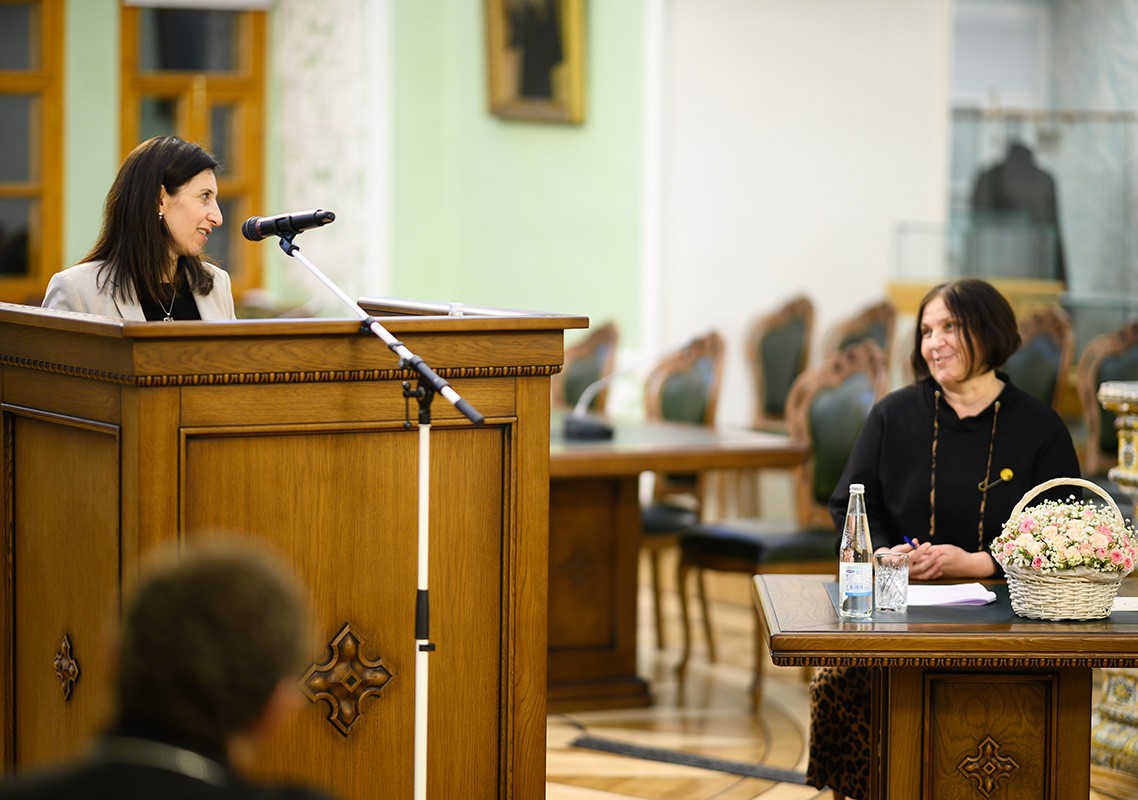
Despite the variety of problems addressed in the reports, each presentation sparked active discussion, testifying to the genuine love of all participants for the Christian East. Students who attended the event also took part in the discussions—the topics of many presentations are directly related to their lecture material.
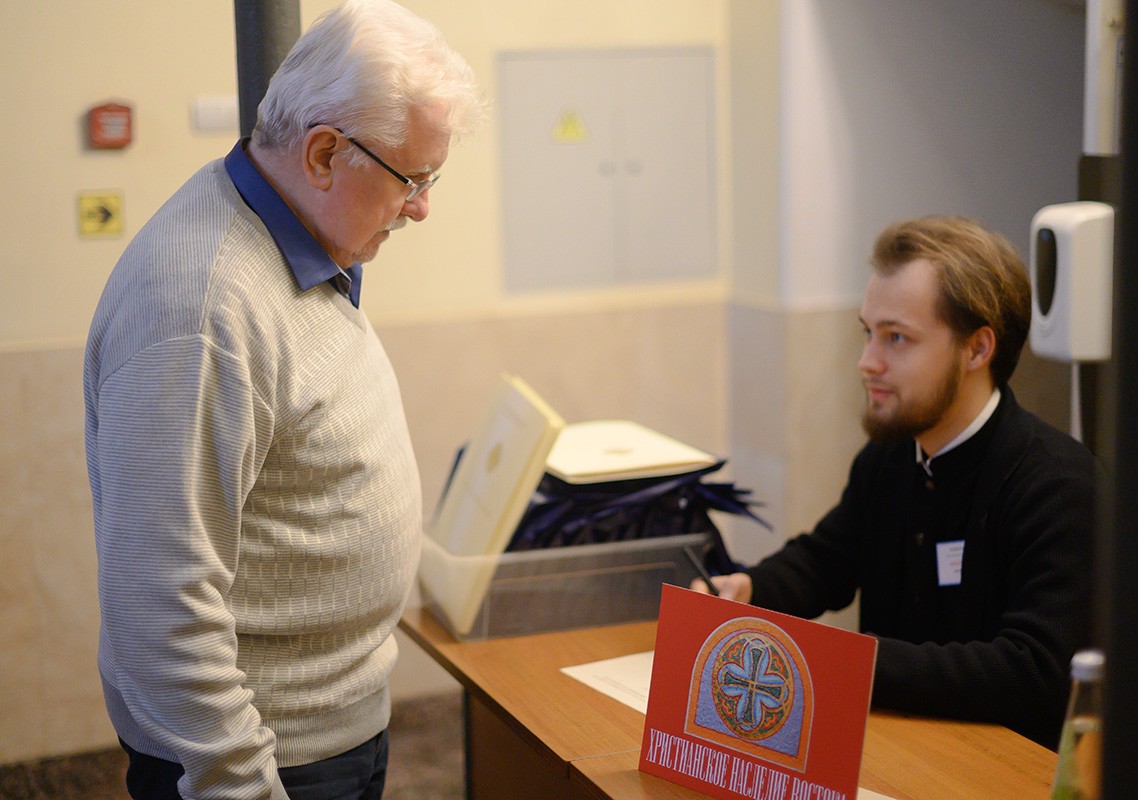
Students also participated in conducting the event, especially Maxim Egorov, Seraphim Krivonogov, and Vladimir Ilyin.
The conference that took place is not merely an exchange of opinions and a summing up of meticulous research work. Above all, it is a celebration of communication among scholars engaged in solving diverse scientific problems. And only in personal, direct communication lies the key to successfully solving any genuine problem, including those directly related to the Christian East.
The following presentations were delivered at the conference:
- Priest G. Temkin (St. Gregory the Illuminator Theological Seminary, St. Petersburg). The Spread of Christianity in the Armenian Region of Syunik in the 1st–6th Centuries;
- N.G. Golovina (St. Tikhon's Orthodox University, Moscow). The Genre of Questions and Answers as a Form for an Anti-Muslim Catechism by Coptic Patriarch John III the Merciful (7th Century);
- P.A. Kuzminykh (Ural State Pedagogical University, Yekaterinburg). The All-Night Vigil according to Manuscript Sin. ar. 264 (14th Century);
- L. Khuchua, E. Abuladze (Tbilisi Theological Academy, Tbilisi, Georgia). The History of Ancient Manuscripts of the Gospel in the Georgian Language;
- A.A. Rozhogina (Higher School of Economics National Research University, Moscow). Martyr-Warriors in Armenian Hymnography;
- Hierodeacon Georgy (Ramazyan) (Moscow Theological Academy, Trinity-St. Sergius Lavra, Sergiev Posad). Transcaucasia between Russia, Turkey, and Iran in the 17th–18th Centuries: The Beginning of the Pro-Russian Orientation of the Armenian Church;
- A.V. Khrenkov (Institute of Oriental Studies of the Russian Academy of Sciences, Moscow), E.Yu. Koval'skaya (Center of Church Sciences "Orthodox Encyclopedia", Moscow). Russian-Ethiopian Religious Contacts and Inter-Church Relations in the 19th – Early 20th Century (Based on Archival Documents);
- A. Grigoryan (V.Ya. Bryusov State University, Yerevan, Armenia). The Jerusalem Patriarchate of the Armenian Apostolic Church;
- Hierodeacon Maxim (Sudakov) (Independent Researcher). The Liturgy of the Syrian Melkites as Evidence of the Church's Reception of the Hebrew Text of the Bible;
- Priest Alexander Zinovkin (St. Petersburg Theological Academy, St. Petersburg). Sources of the New Testament Commentary by Ishodad of Merv;
- E. Saribekyan (Mesrop Mashtots Institute of Ancient Manuscripts (Matenadaran), Yerevan, Armenia). Armenian Manuscripts of the Work "Hexaemeron" by George of Pisidia and Its Reception in Some Armenian Sources;
- A.A. Lukashevich (St. Tikhon's Orthodox University, Moscow; Moscow Theological Academy, Sergiev Posad). The Paschal Service in Syro-Melkite New Tropologia of the 9th–12th Centuries: Structure and Liturgical Terminology;
- S.N. Savenko (Pyatigorsk Regional Museum, Pyatigorsk). Traditions and Other Testimonies about Byzantine Monasteries as a Positive Factor in the Creation of Russian Athonite Monasteries in the North Caucasus;
- E.M. Kopot' (Moscow State Pedagogical University, Moscow). Between West and East: Russia in the Levant in the Late 19th Century;
- Priest Alexander Treiger (Dalhousie University, Halifax, Canada). An Unknown Source on the History of Orthodoxy in Egypt: The Arabic Encyclical Letter of Patriarch Athanasius III of Alexandria;
- E.V. Smirnova (Institute of Oriental Studies of the Russian Academy of Sciences, Moscow). The Mixed School of the Imperial Orthodox Palestine Society in Jerusalem: Peculiarities of Interethnic Relations.
MThA Press Office


