

MThA’s Orthodox Pauline Studies Student Society Discusses Iconography of Apostle Paul
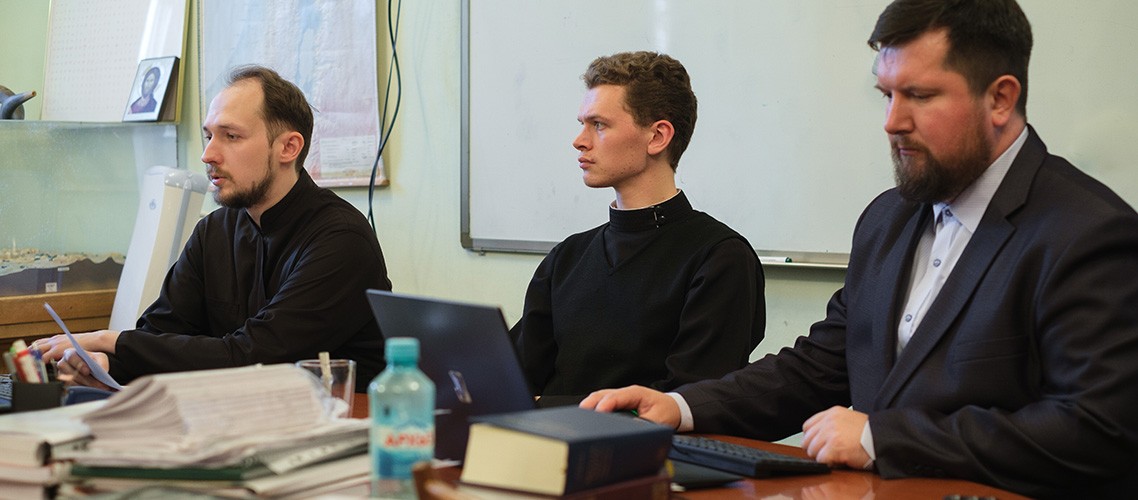
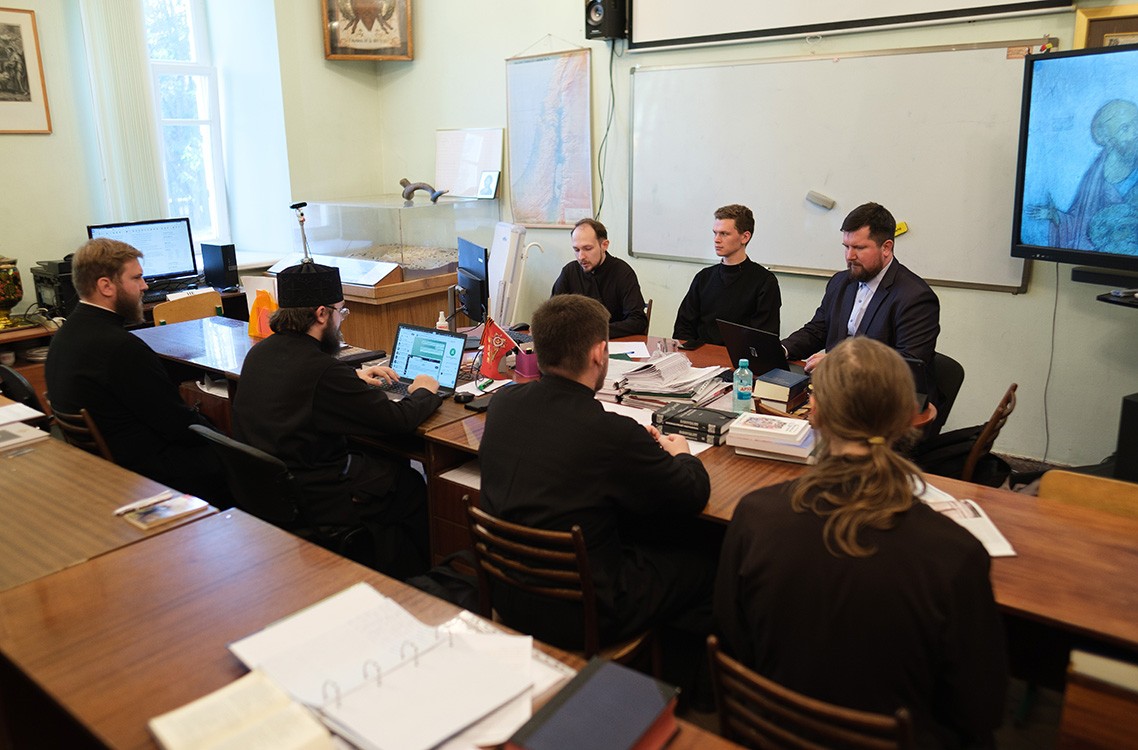
On October 1, 2025, the Biblical Cabinet of the Moscow Theological Academy hosted a meeting of the "Orthodox Pauline Studies" student scientific-theological society in a hybrid (in-person and remote) format. The featured speaker, B.B. Goncharuk, an assistant at the MThA Department of History and Theory of Church Art, iconographer, Master of Theology, and member of the research team at the "CAC" Museum of Christian Art presented a report titled "The Iconography of the Apostle Paul".
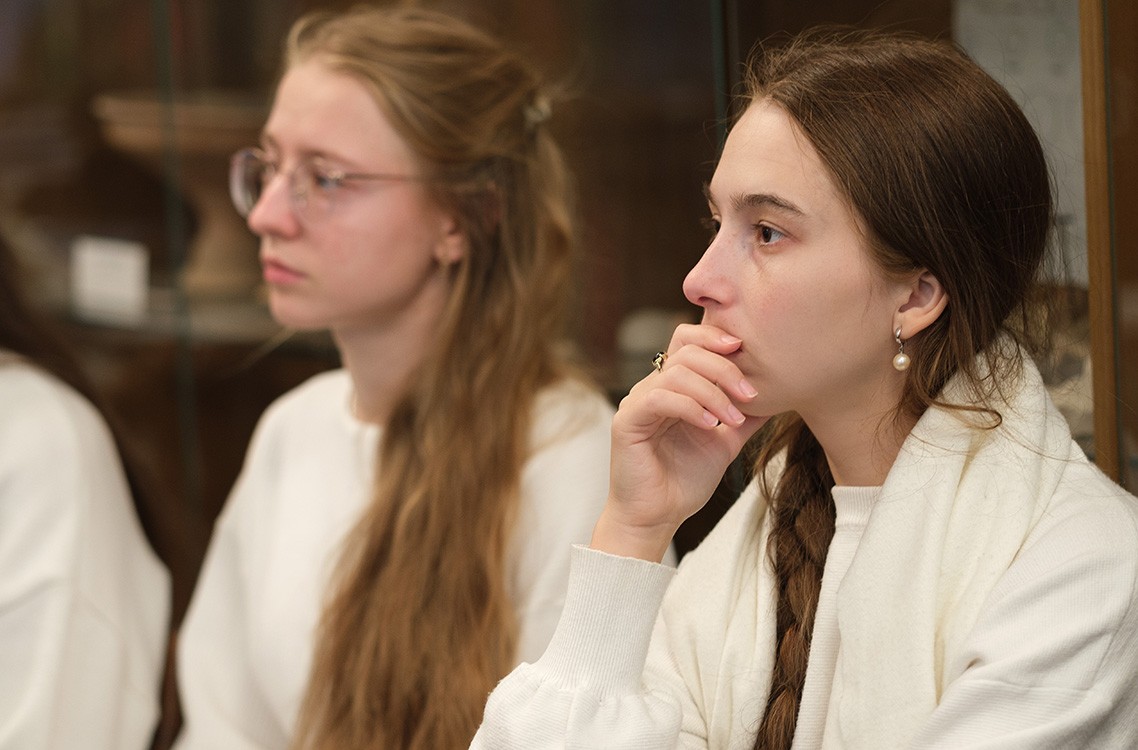
The meeting was attended by representatives from the Moscow and Saint Petersburg Theological Academies, as well as the Pererva, Tula, and Ekaterinodar Theological Seminaries.
In his report, B.B. Goncharuk provided an overview of the iconography of Saint Apostle Paul from ancient times to the Russian Middle Ages. He emphasized that images of Paul are typically paired with Apostle Peter, ensuring recognizability through specific portrait features: Paul is depicted as short, bald, bow-legged, with joined eyebrows and a prominent nose, as described in the apocryphal "Acts of Paul and Thecla". This highlights the continuity of Living Tradition, where the apostles were captured as they were seen in life. The development of this iconography is linked to the formalization of the veneration of the apostles in the 4th century under Emperor Constantine. As Paul was not among the original Twelve, he rarely appears in Christological scenes. The speaker also noted that these distinct portrait features assist in attribution within large compositions featuring multiple apostles.
Early depictions of the apostles trace back to ancient compositions of philosophers with their disciples, such as the 3rd-century Syrian mosaic of Socrates. In Christian art, this transformed into scenes of Christ with the apostles, where Paul and Peter stand out due to their portrait-like characteristics. The speaker mentioned possible parallels between the images of Peter/Paul and Socrates/Aristotle, though he noted this remains a hypothesis discussed in informal circles rather than an established scientific fact. In the 4th century, such compositions appeared in Roman catacombs, such as the Catacombs of Domitilla and Saint Thecla, where the apostles are depicted with scrolls in medallions (Imago clipeata), creating the effect of a painted portrait. Eusebius Pamphili mentions icons on boards; although he personally opposed such images, his testimony serves as evidence of their existence.
By the end of the 4th century, the iconography became fixed in frescoes and sarcophagi: Peter with curly grey hair and a beard, and Paul with a receding hairline, forehead wrinkles, and a wedge-shaped beard. The Traditio Legis (Delivery of the Law) composition on the Sarcophagus of Junius Bassus shows Christ handing a scroll to Peter with Paul standing nearby, symbolizing the triumph of the Church. This theme recurred in church decorations, such as the Mausoleum of Santa Costanza and the Basilica of Sant’Apollinare in Milan, where the apostles appear in Roman attire with rhetorical gestures. In the 5th and 6th centuries, the Ravenna mosaics in the baptisteries and the Archbishop’s Chapel demonstrated realistic portraits with chiaroscuro modeling and golden robes, marking the transition from ancient realism to conventional iconography.
In San Vitale, the apostles appear as if painted from life with expressive features, while 6th-century Egyptian textiles and the Basilica of Cosmas and Damian in Rome emphasize the monumentality of the figures. Medallions (clipeus) are linked to imperial portraiture, which likely influenced the development of the nimbus (halo). Cycles from the "Acts of the Apostles" illustrate martyrdom and the meeting of Peter and Paul, as seen on 4th-century sarcophagi and ivory diptychs. The scene of the apostles embracing, derived from apocryphal texts, is depicted in the Vigna Massimo catacombs. Lost frescoes from the old St. Peter’s Basilica and Saint Paul Outside the Walls in Rome served as the basis for later cycles, including scenes of Paul’s execution by the sword.
Paired images on gold-leaf glass vessels show Christ crowning the apostles, stemming from the Traditio Legis tradition.
In the Middle Byzantine period (9th–12th centuries), the apostles appeared in manuscript miniatures, such as the Sacra Parallela and the homilies of Gregory Nazianzus, holding codices and scrolls. In church murals, such as those in Hagia Sophia in Ohrid, they are featured in scenes of the Eucharist and the Dormition of the Mother of God. 12th-century mosaics in Palermo illustrate the Acts, including Paul’s preaching. Post-Byzantine icons of the 13th and 14th centuries were enriched with Deesis tiers, ornaments, and metal covers (oklads), as seen in the monasteries of Sinai and Athos, where the apostles are depicted with traditional attributes.
Old Russian art adopted Byzantine types: the icon of Peter and Paul from the St. Sophia Cathedral in Novgorod (11th century) features a reversal of positions, possibly related to the Great Schism of 1054, where Paul, as the Apostle to the Gentiles, is placed first. In Kiev’s St. Sophia and the Vladimir Cathedral, the apostles appear in the Eucharist and the Last Judgment. Rublev’s iconostases (the Zvenigorod Rank, Trinity Cathedral) show soft, harmonious images of Paul wearing a burgundy himation and a blue chiton. Apostle Paul also appears in anachronistic scenes, such as the Ascension or the Descent of the Holy Spirit, emphasizing the timeless nature of the iconography.
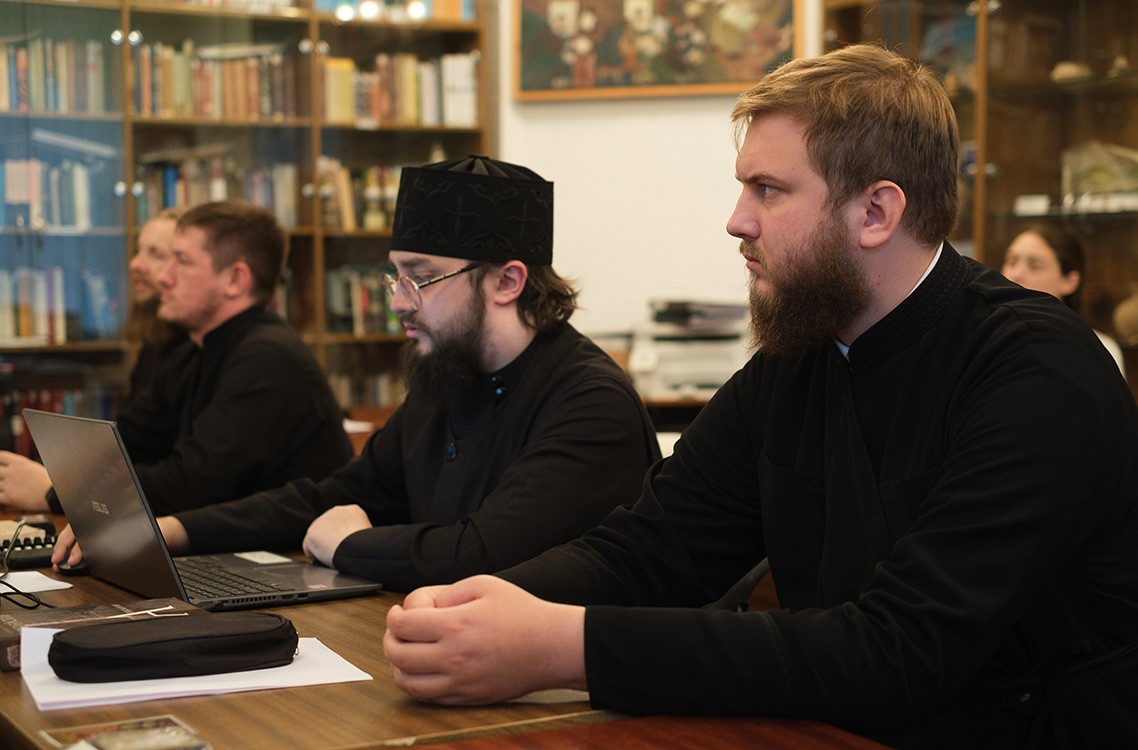
The lecturer concluded by proposing a second part of the talk covering the 16th–18th centuries and answered questions regarding sources, attributes (the sword as both the instrument of martyrdom and the symbol of the Word of God from the Epistles), and the evolution of the style. He emphasized that Paul’s image remains stable: baldness, a wedge-shaped beard, a blue chiton, and a cherry himation, with variations depending on his pairing with Peter. In the post-Byzantine period, elements such as the sword and a model of a church held in the apostles' hands (symbolizing the Church) were added.
During the discussion, the lecturer addressed the possible influence of apocrypha on iconography, noting that texts like the "Acts of Paul" likely reflect tradition rather than serve as a primary source, and may contain borrowings from ancient descriptions of heroes. He also touched upon gestures: rhetorical gestures in early art evolved into blessing gestures, while clothing colors and attributes (scrolls vs. codices) depend on the composition, highlighting the dualism of Peter and Paul as a symbol of the fullness of the Church.
In conclusion, the speaker emphasized the importance of the paired depiction for recognizability and the integrity of Church Tradition, where Paul represents the preaching to the Gentiles and Peter represents apostolic authority. The discussion touched on modern interpretations, such as the sword in the Epistles (Ephesians 6:17), and suggested further research into links with ancient philosophy. The audience noted the professionalism of the lecture, which covered the period from the catacombs to Rublev’s icons, and expressed interest in a continuation of the series.


MThA Press Office