

MThA Department of Biblical Studies Discusses Apostle Paul's Ecclesiology
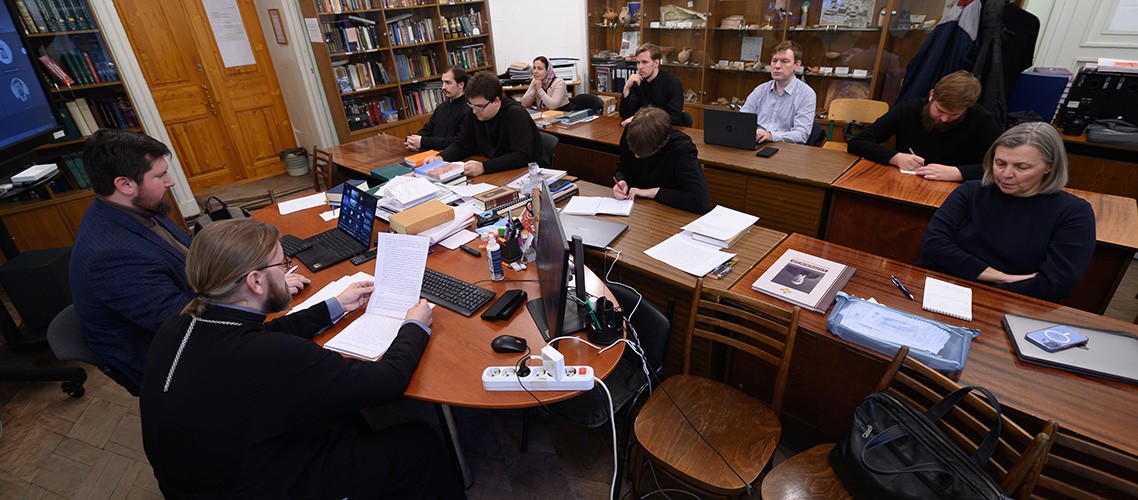
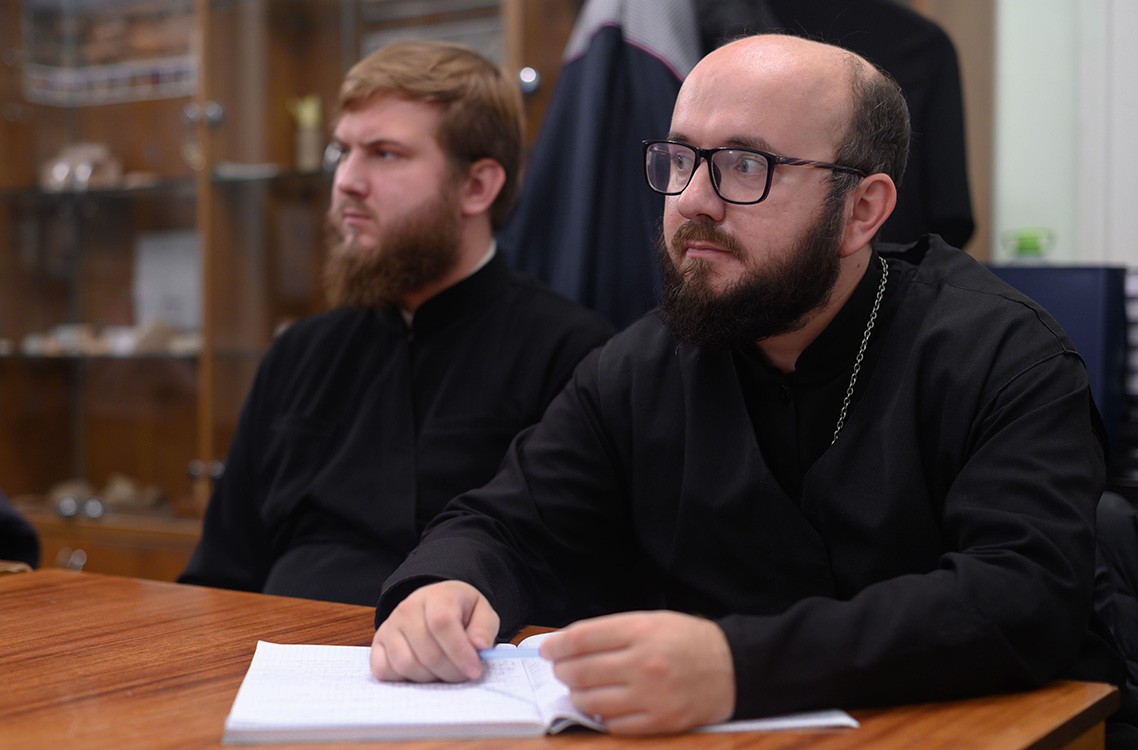
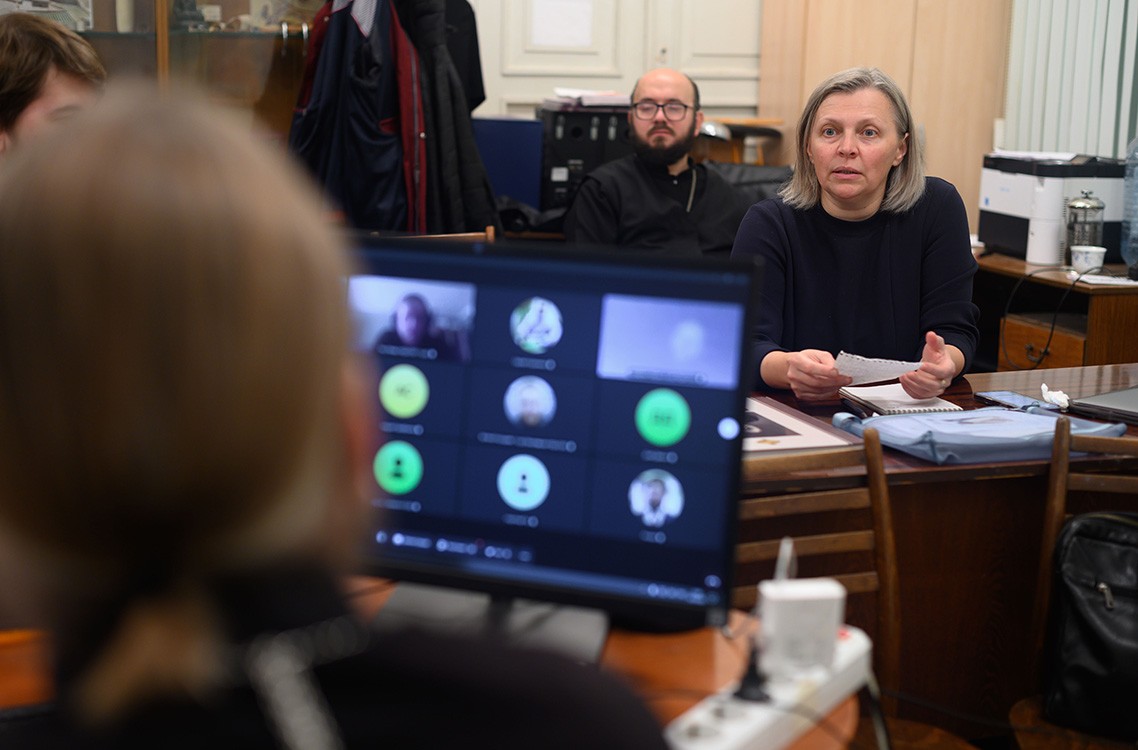
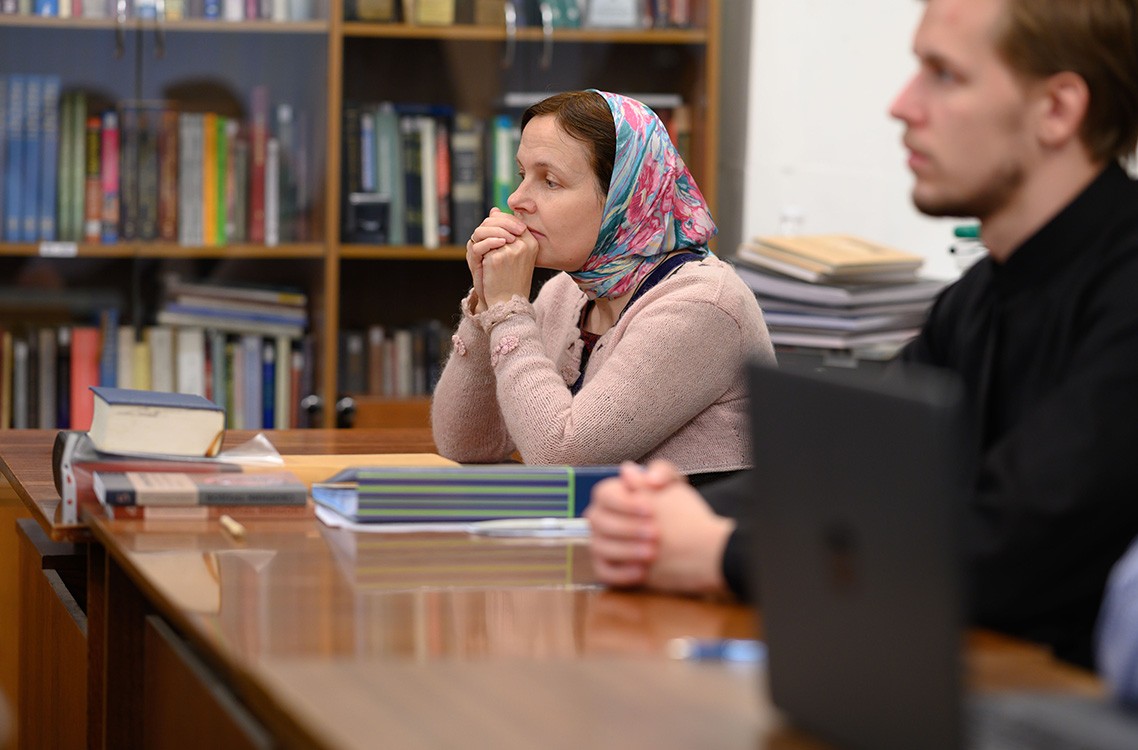
On October 29, 2025, a joint meeting of the scientific school of the Department of Biblical Studies, "The Legacy of the Apostle Paul in Patristic Exegesis, Russian Pre-Revolutionary and Contemporary Biblical Studies", and the Student Scientific and Theological Society, "Orthodox Paulinistics", was held in a hybrid (in-person and remote) format at the Biblical Study Room of the Moscow Theological Academy.
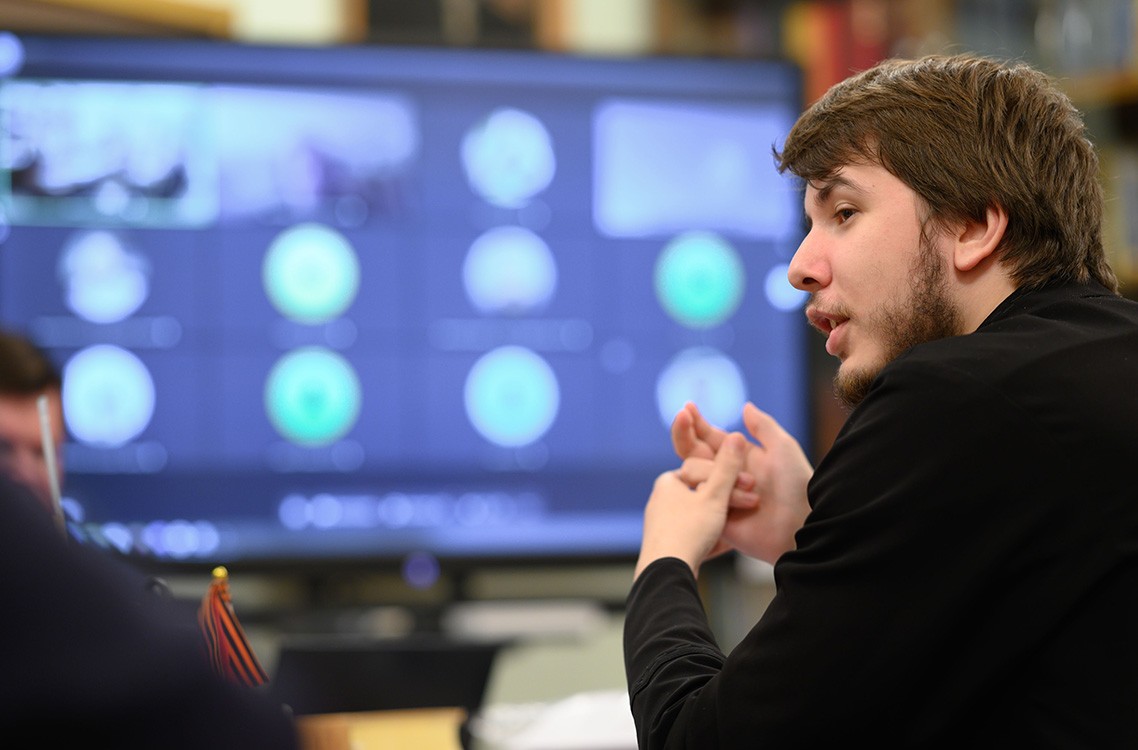
The participants of the meeting, whose total number (in-person and online) exceeded 35, included faculty and students from the MThA, St. Tikhon's Orthodox University (PSTGU), as well as the Tula, Perervinskaya, and Yekaterinburg Theological Seminaries.
A report on the topic "Various Types of Ecclesiology in the Epistles of the Apostle Paul" was delivered by Priest Alexander Minkin, a master's student in the Distance Education Department of the MThA.
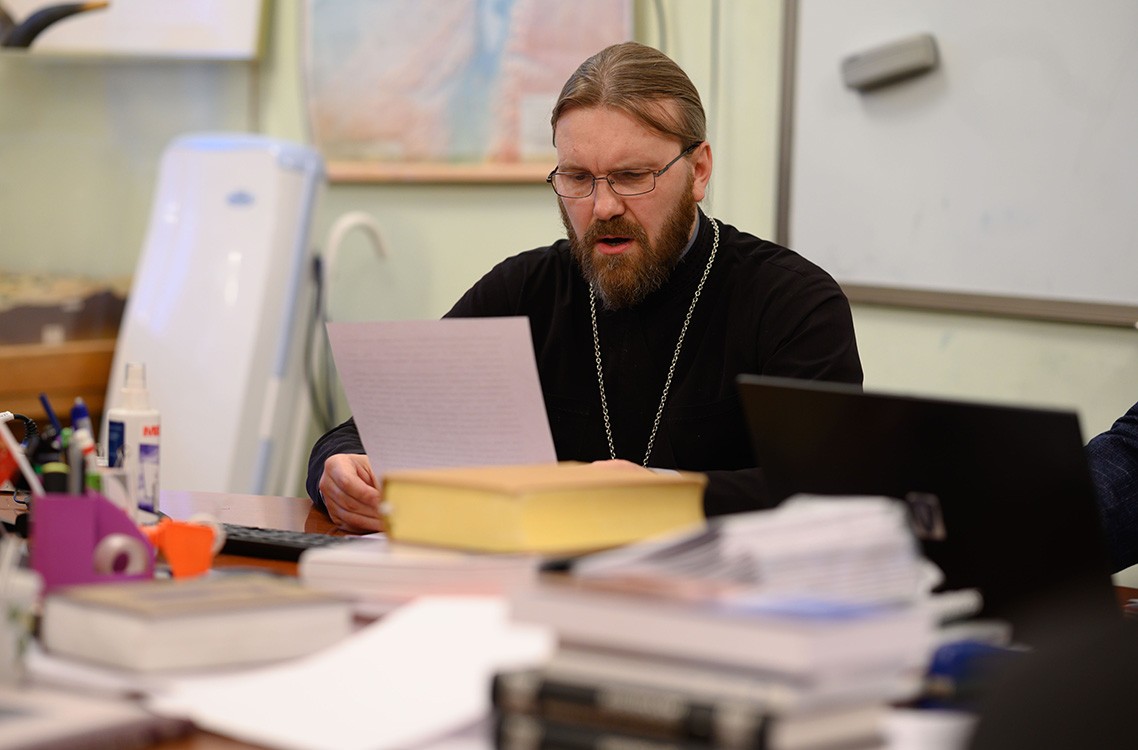
At the beginning of his presentation, the speaker noted the relevance of the topic, emphasizing that the Apostle's teaching on the Church acquires particular significance in the context of contemporary processes, such as territorial and canonical divisions. The goal of the report was to formulate and examine various types of ecclesiological teaching presented in the epistles of the Apostle Paul.
Father Alexander explained that although for the Apostle himself the teaching about the Church was unified, for scientific research it is possible to distinguish several "types", or ways of describing church life. The speaker identified two main levels of understanding the Church in the Apostle's works: the ecclesiology of the local community and the ecclesiology of the universal Church.
Considering the local community, Father Alexander drew attention to the phenomenon of the "house church". The first Christians gathered in the homes of wealthy community members for prayer meetings and the celebration of the Eucharist, or the "breaking of bread". These house communities became the foundation and center for the spread of Christianity. Another important aspect is the representation of the Church as the "pillar and foundation of the truth" (1 Tim. 3:15). The speaker analyzed the Greek terms and emphasized that the function of the Church is to be a support and buttress for the truth of Christ's teaching.
Moving to the universal dimension, the speaker showed how the Old Testament concept of the "people of God" is transformed by the Apostle Paul. It now includes not only Israel but also believing Gentiles, which the Apostle illustrates with the image of wild branches grafted onto the olive tree.
Father Alexander elaborated in detail on the key images of the universal Church in the Apostle's epistles. One of them is the "Bride of Christ". This image describes the deep personal relationship between Christ and the Church, akin to a marital union, where the Apostle presents the Corinthian community as a "pure virgin" betrothed to Christ (2 Cor. 11:2).
According to the speaker, the central image of the Apostle Paul's ecclesiology is the "Body of Christ". The Church is not merely an organization but a mystical organism in which all believers are organically united with Christ as the Head. This unity, as Father Alexander emphasized, overcomes any social and ethnic differences: "there is neither Greek nor Jew... but Christ is all, and in all" (Col. 3:11).
Special attention in the report was paid to the inseparable connection between ecclesiology and the Eucharist. The Church, in Father Alexander's words, is conceived as a "eucharistic community". It is precisely through participation in the Sacrament of the Body and Blood of Christ that a believer becomes part of this mystical Body, and without the Eucharist, as the speaker asserted, there is no life for the Church.
After the presentation, a lively discussion took place, involving both those present in the room and remote participants. Questions were raised about the boundaries of the Church, the continuity of the New Testament ekklesia in relation to the Old Testament people of God, and the theological precision of the terms used.
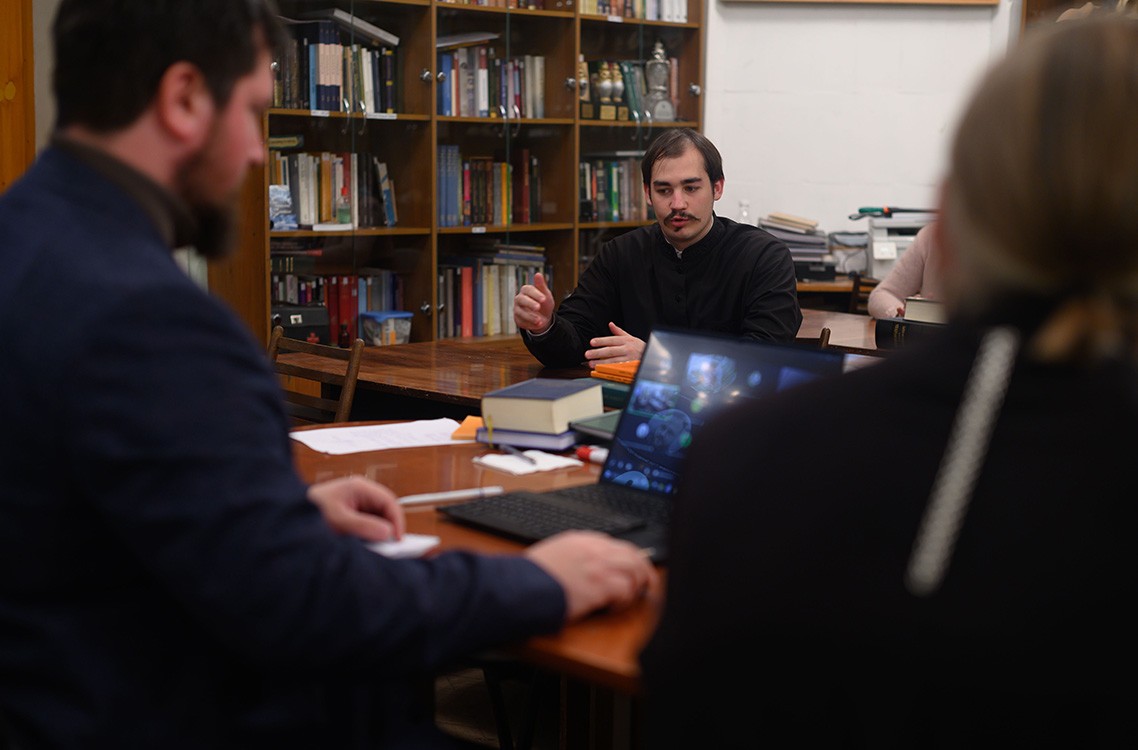
To conclude the meeting, the next presentation was announced, scheduled for November 5. A lecture on the topic "Antithesis in the Preaching of the Apostle Paul: From the Foolishness of Christ to the Power of God (1 Cor. 1:17–2:2)" will be delivered by Priest Mikhail Yakutik, a master's student in the MThA Distance Education Department.